


CIOs are no longer measured solely on uptime or IT efficiency. According to a recent Gartner report, the top priorities for CIOs in 2025 are increasingly tied to enterprise growth, innovation, and data-driven decision making.
In other words, today’s CIO is already acting as a business architect by designing strategies, aligning technology with outcomes, and delivering measurable value across the organization. The mandate is clear: technology leadership is now inseparable from business leadership.
In a recent Gartner report on CIO challenges, insights gathered from thousands of executives reveal that the top agenda for today’s CIO is centered on five critical priorities that define success in 2025 and beyond.
Priority 1: Unleashing business value with AI and data
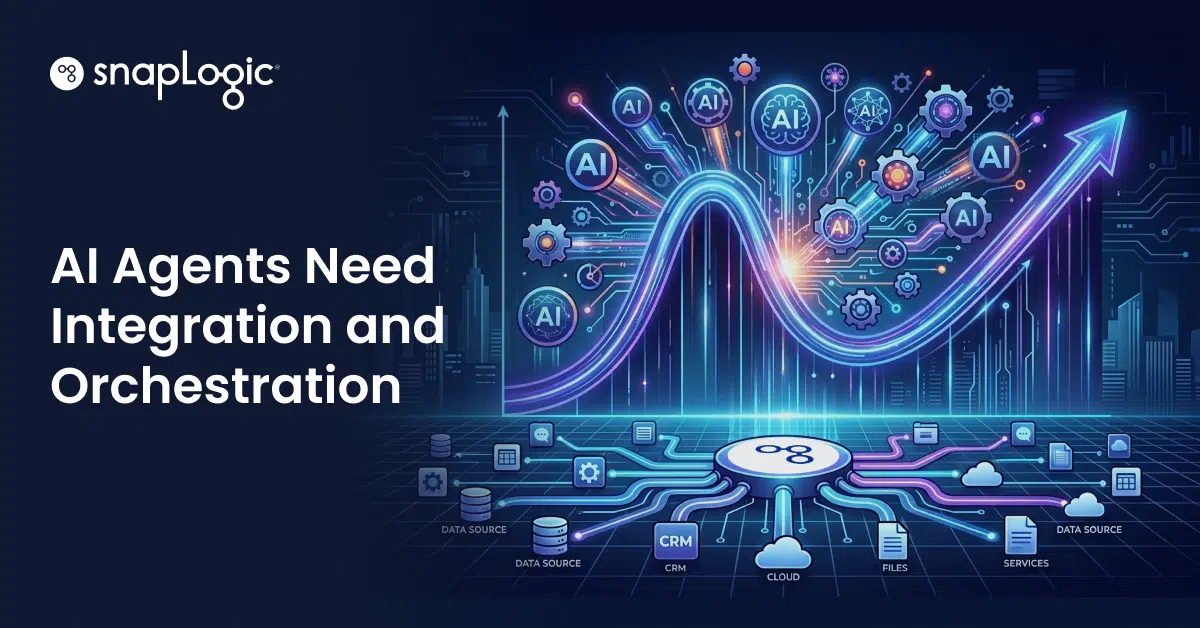
The path to next-generation business outcomes is paved with AI. But AI is only as powerful as the data that feeds it. Success hinges on building a resilient AI-Ready Data Ecosystem.
Currently, only 49% of data & analytics leaders tie their metrics to concrete business outcomes, but organizations with data quality and governance in place see a 26% improvement in results. The takeaway is clear: it’s time to move beyond tactical data projects and establish robust data pipelines, evolve metadata, and assure data quality to align data directly with high-impact AI use cases.
Priority 2: Shifting cost optimization from tactical to strategic
In an era where global IT spending is projected to hit $5.74 trillion in 2025, managing the budget is paramount. Yet, only 26% of CIOs rate themselves as experts in strategic cost management.
The strategic approach moves past simple cuts and establishes a continuous cycle focused on three pillars:
- Reducing costs programmatically
- Improving performance and efficiency
- Reinvesting savings into core business outcomes
The CIOs who adopt this ongoing strategic mindset are projected to be 65% more successful in elevating their leadership role by 2028.
Priority 3: Driving continuous application modernization
The foundation of the digital enterprise is crumbling: 59% of applications have technical or business-fit issues, and 47% of workloads remain on costly, inflexible legacy core systems. The focus for the next 12 months must be on “Integrate, innovate, modernize.”
Application modernization is not a single, monolithic project, but a continuous journey. By adopting agile, incremental cycles (i.e., rehosting and replatforming to complete rebuilding or replacing) leaders can reduce risk and ensure their application portfolio aligns with evolving business capabilities.
Priority 4: Articulating IT’s business value
Despite the investments, many technology leaders still struggle to connect the dots between IT expenditure and business impact. Even with positive results, 30% of projects fail after proof of concept, and while 53% report GenAI ROI meets expectations, the challenge remains: failure to articulate an “IT value story.”
The solution is to stop defining success by technical delivery and start connecting run/change/grow metrics directly to the business: innovation, efficiency, and revenue indicators. IT must demonstrate its value in measurable, outcome-based terms.
Priority 5: Evolving to a service-optimizing operating model
A staggering 62% of leaders cite legacy operating models as barriers to strategy execution. The most successful approach is to transform into a service-optimizing IT operating model. This means IT operates “like a business,” focusing on end-to-end service outcomes, exceptional customer experience, and quantifiable value delivery.
This transformation requires a cross-enterprise effort, supported by the CFO for FinOps, the CDO for data quality, and the CEO for enterprise-wide accountability.
The platform for the business architect
The mandate for the CIO in 2025 is to lead the enterprise-wide transition from legacy technology to a modern, value-driven architecture. This requires building AI-ready data ecosystems, implementing service-optimized operating models, and running continuous modernization cycles.
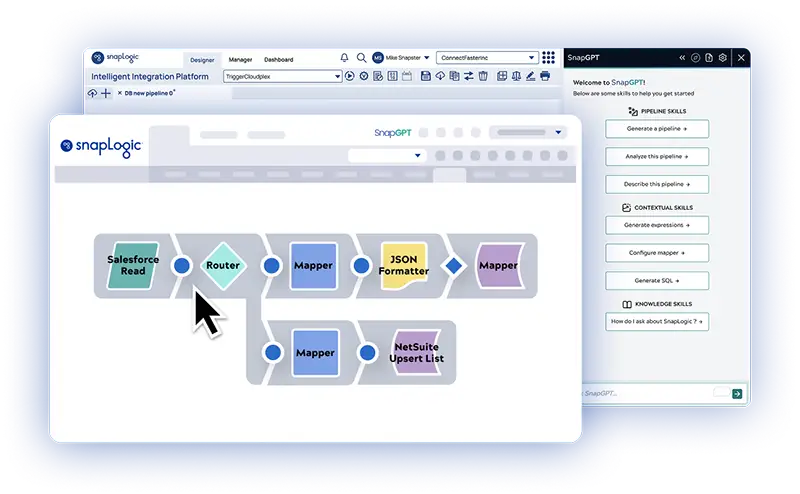
To execute this vision, the new business architect needs a unified, intelligent platform to connect data, automate processes, and simplify the complexity of modernization across the enterprise. This is where SnapLogic steps in, providing the essential platform to make the CIO’s new mandate a reality. Book a demo to see it in action.