

Most universities have now run at least one AI pilot. Many have run several. The pattern that follows tends to look familiar: a promising proof of concept, a presentation to leadership, and then a slow fade as the initiative struggles to move into production. The frustration is real, and it rarely has anything to do with the AI itself.
The root cause is almost always the same: the data infrastructure underneath the pilot was not built for what enterprise AI actually requires. You can have the best model available and still produce nothing of value if the data feeding it is siloed, stale, or inaccessible to the agent at the moment it needs to act.
This post covers the structural decisions that determine whether AI projects in higher education reach production or stay stuck in pilot purgatory.
Build the data foundation first
AI agents operate on data. And in most higher education environments, the data an AI agent would need to do something genuinely useful is distributed across a student information system, a learning management system, a CRM, a data warehouse, and a collection of departmental tools that have never been connected systematically.
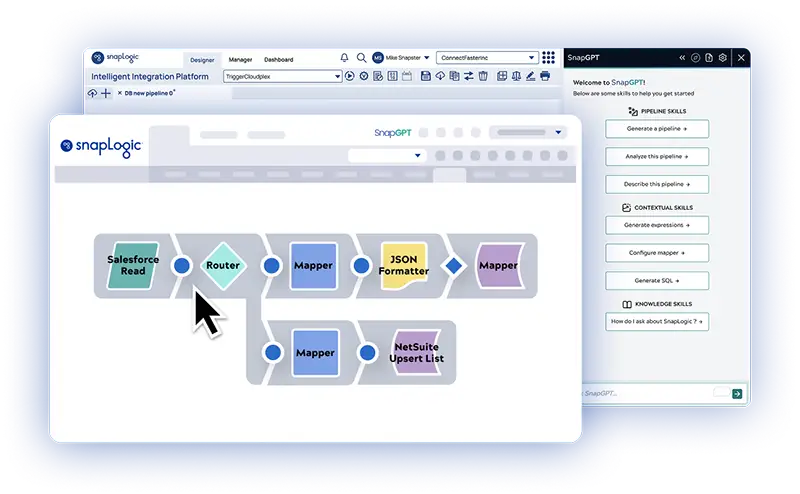
The practical implication is that AI deployment in higher education is fundamentally an integration project before it is an AI project. The institutions that are successfully moving AI into production are the ones that invested in building a unified data fabric first, one that provides governed, real-time access to data across systems, so that agents can actually act on current information.
This does not require a multi-year infrastructure overhaul before you can move. It does require being deliberate about which data domains you unify first, based on where AI can deliver the most immediate value for your institution.
Understand what agentic AI actually means in practice
The term gets used loosely, so it is worth being precise. An AI agent is a model that has been given access to tools and that can use those tools autonomously to complete a task. The agent decides what actions to take, in what sequence, based on the goal it has been given and the results it gets back from each tool invocation.
In practice, this means an agent could query your student information system, parse a PDF, compare data against a set of requirements stored in a database, and then create a case in Salesforce, without a human initiating each of those steps individually. The human sets the goal and reviews the outcome. The agent handles the intermediate steps.
The capability is real, and the use cases in higher education are genuinely high-value: prospective student eligibility assessment, academic advising queues, advancement prospecting, and at-risk student identification.
But none of these work unless the underlying tools the agent relies on are built correctly.
Scope your tools tightly and build in guardrails
When you give an AI agent access to a system, you are making a specific architectural decision about what that agent can and cannot do. The tools you expose to the agent define its blast radius. A well-designed agent tool does one thing, has clearly defined permissions, and cannot take actions outside the scope of what it was built for.
In a fundraising prospecting workflow, for example, the tool that fetches prospect data from Salesforce should be read-only. The agent should have no ability to modify, delete, or overwrite donor records, even if it somehow produced a hallucinated instruction to do so. The guardrail is structural: the tool simply does not have that capability.
A useful mental model: treat AI agents the way you treat human employees. You would not give a new fundraising coordinator admin access to your entire data warehouse. You give them access to what they need to do their job. The same logic applies to agents.
Design for human-in-the-loop from the beginning
AI agents can move fast. In most higher education use cases, you don’t want them to move so fast that a human never reviews the output before it reaches a student, a donor, or an external system.
Human-in-the-loop is an architectural pattern, not an afterthought. The agent completes the work, surfaces the result, and pauses for a human to review and approve before anything gets sent or committed. The AI handles the research, the drafting, and the data lookup. The human handles the judgment call.
In a student advising workflow, this might mean the agent assesses a student’s eligibility, creates a case in the advising queue, and notifies the advisor, but does not send any communication to the student directly. The advisor reviews the case and decides what happens next. The agent removes the administrative burden. The advisor provides the human context.
Make your AI interactions auditable
One of the most common objections to deploying AI in higher education is that institutions cannot see what the AI is doing with sensitive student data. This concern is addressable, but only if you design for auditability from the start.
Auditability in an agentic system means logging every tool invocation: what tool ran, what inputs it received, what it returned, and when. This log should be write-only from the agent’s perspective. The agent cannot choose whether to log or not. The logging happens at the tool level, as a built-in behavior, regardless of what the agent requests.
When you have this in place, compliance officers, data stewards, and institutional auditors can review exactly what happened in any given interaction. That transparency is often the difference between an AI deployment that earns institutional trust and one that stalls in a governance review indefinitely.
Where to start
The question most IT leaders ask at this point is where to begin. The answer that tends to produce the fastest real value is also the least glamorous: identify the repetitive, high-volume tasks that consume significant staff time and are currently dependent on manual data lookup across multiple systems.
These are the workflows where a well-scoped agent with access to a unified data layer can eliminate the most friction in the shortest time. Prospective student eligibility assessment. Donor prospect identification. At-risk student flagging for advisor review. Transcript parsing and routing.
Start with one workflow, build it correctly with the principles above, get it into production, and measure the outcome. The institutional confidence that comes from a successful first deployment makes every subsequent one easier to approve and faster to ship.
The goal is to build a repeatable operating model that enables AI to work safely and produce outcomes that can be measured and defended.
Ready to scale your institution’s AI initiatives? Learn more about SnapLogic for Higher Ed or book a demo to see our platform in action.