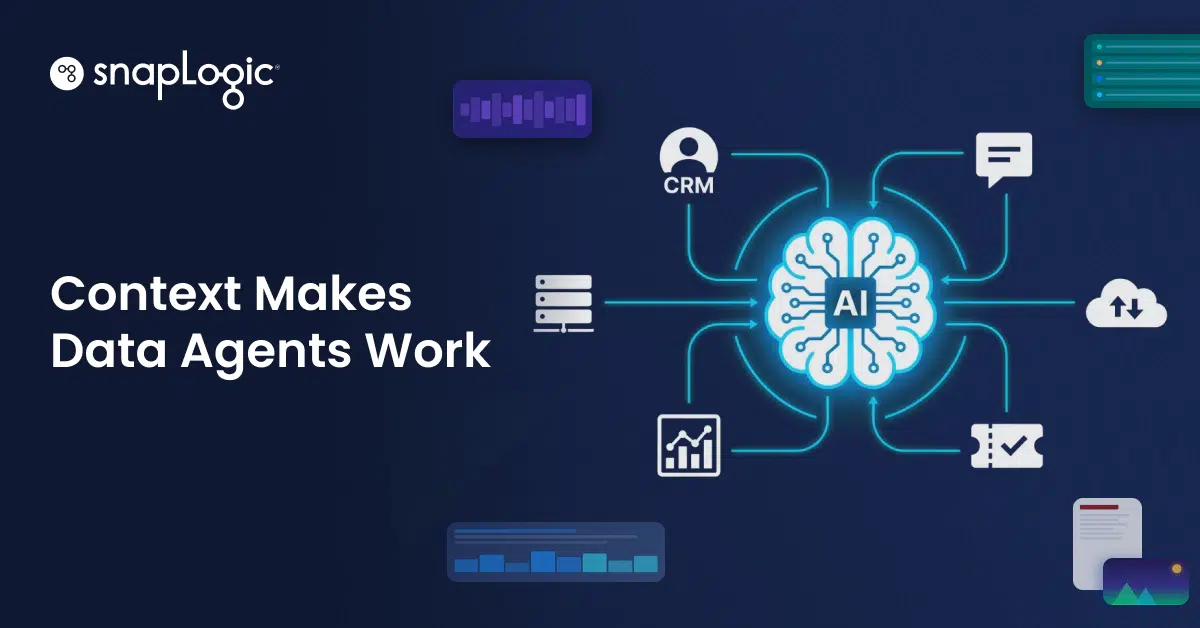


AI agents are getting more capable. They can reason, plan, retrieve context, and take action across dozens of systems, automatically. They can work with each other and call on outside tools. And they are being deployed in production environments today. But agents pose a governance problem that is not getting enough attention.
Most AI agents run with far more access than they need. When a developer connects an AI agent to a set of tools (e.g., CRM, database, ERP system), the fastest path is also the least governed one. An API key returns data. A service account grants access. The agent calls what it needs. The demo is convincing. The proof of concept succeeds.
Then someone digs in deeper and has questions:
- What exactly can this agent access?
- What did it do yesterday?
- Could it have touched data it was never meant to see?
In most enterprise deployments today, the honest answer is: we are not entirely sure.
The problem with broad access
The default model for giving AI agents access to enterprise tools is surprisingly similar to handing a new employee a master key on their first day. Not because anyone thought it through, but because it was the easiest way to get things working.
Most AI agent frameworks let you expose tools by pointing the agent at an API endpoint. There is no policy enforcement, access scoping, or audit trail. The agent calls the tool, the tool responds, and everyone moves on.
This works fine in a sandbox. In an enterprise environment with regulated data, compliance requirements, and real users whose identities matter, it becomes a governance problem with real consequences.
What “least-privilege access” actually means for AI agents
The principle of least privilege has been a security standard for decades. Users and systems should only have access to the resources they actually need to do their job.
For AI agents, this principle needs to be applied at every layer.
What tools can the agent invoke? Not every agent needs access to every system. An HR assistant doesn’t need to query financial records. A customer service agent doesn’t need write access to the production database.
On whose behalf is the agent acting? When an AI agent takes an action, it should do so with the permissions of the specific user who triggered it, not as a generic service account with broad standing access.
What can the agent actually do within each tool? Token downscoping lets you issue a narrowly scoped credential for each action, limiting what the agent can access even within a system it is authorized to use, so even if something goes wrong, the blast radius is limited.
These three questions don’t have complicated answers. But most AI agent frameworks today don’t ask them at all.
SnapLogic’s approach: policy-enforced tool calling
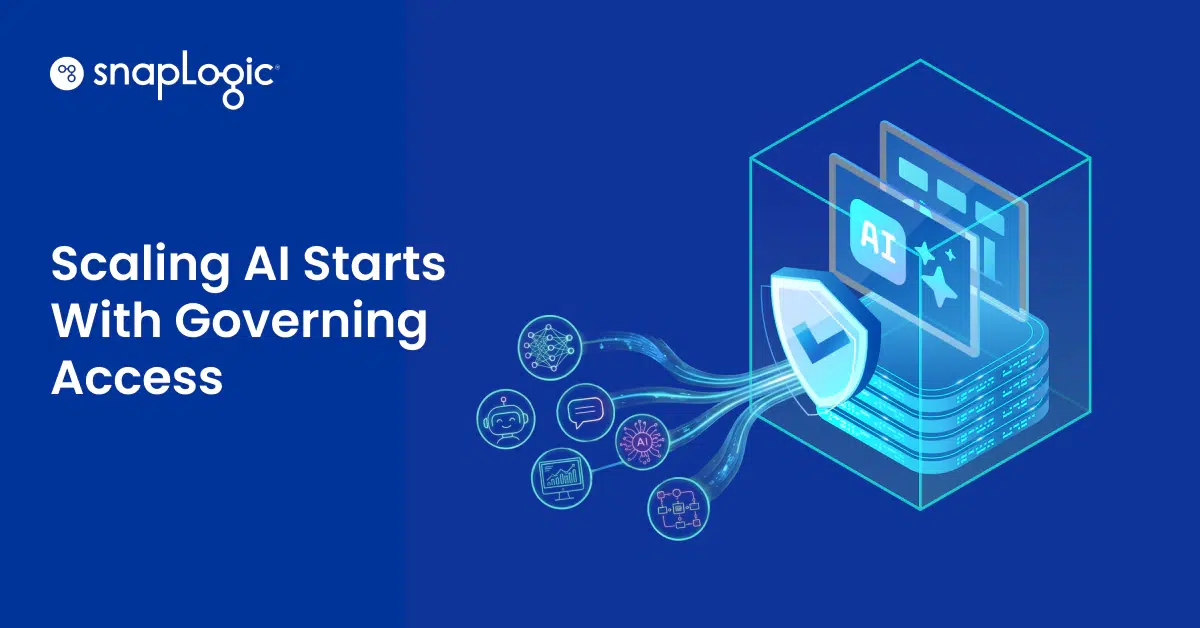
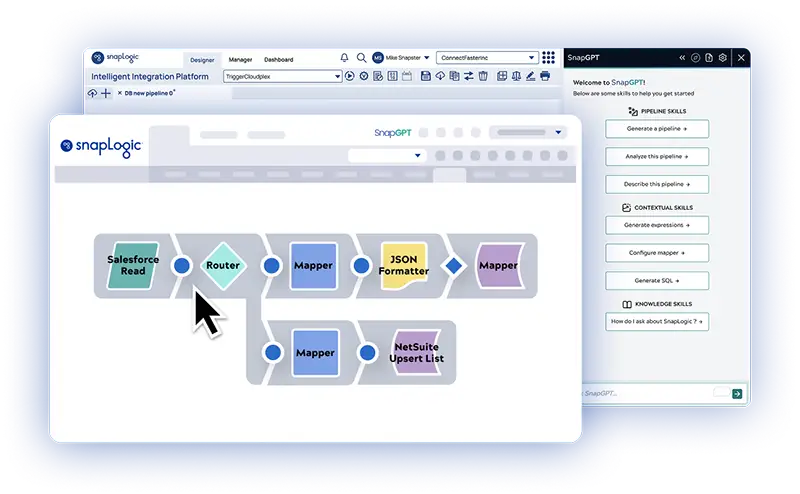
MCP, the Model Context Protocol, is an open standard that defines how AI agents discover and call enterprise tools. SnapLogic’s MCP Server is built around a different model for agent access. Every tool is a SnapLogic pipeline, running on your infrastructure, governed by your policies, and subject to the same API management rules that apply to the rest of your enterprise integrations.
Governance is not optional and cannot be added after the fact. You cannot create an MCP Server without associating it with a policy group. It is a required field at the time of creation.
That means rate limiting, IP restrictions, authentication requirements, and role-based access controls are mandatory for every tool your AI agents can invoke before a single call is ever made.
Why this matters more than you think
The question isn’t whether your AI agents will eventually touch sensitive systems. That’s the whole point of deploying them. The question is whether you’ll have control over that access when it happens.
The alternative is to lock them down so they can’t do damage or leak sensitive information, but that restriction also severely limits how useful the agents can be. Restricting access is not governance.
Access governance for AI agents is not just a security consideration. It is a prerequisite for operating AI at enterprise scale. Without it, every new agent you deploy introduces a new attack surface, a new compliance risk, and a new area of uncertainty.
In Part 2, we’ll go deeper on identity: specifically, why it matters which user an AI agent acts as, and how SnapLogic’s token propagation solution, Trusted Agent Identity, ensures the correct identity follows the agent all the way to the backend system.
This is a 3-part series to explore our upcoming virtual discussion, “Governing AI Agents: Secure Access, Identity, and Control at Enterprise Scale.”Join us on June 10 in your region: register for the EMEA broadcast or the North America broadcast. See you there!