

AI agents are moving fast from experimental chatbots into systems that take real action inside the enterprise: reading records, triggering workflows, and writing results back into production systems. For that to work safely and at scale, agents need a reliable way to reach the applications, databases, and APIs that already run the business.
The Model Context Protocol (MCP) has emerged as the common language for that connection, giving agents a standardized way to discover and call tools. The question for most organizations is where that connectivity should live. Increasingly, the answer is the integration platform they already depend on.
When an iPaaS supports MCP natively, rather than through a bolted-on adapter or a separate project, the benefits show up quickly across security, speed, and long-term platform strategy. Here are the five that matter most.
1. Agents get instant, governed access to enterprise systems
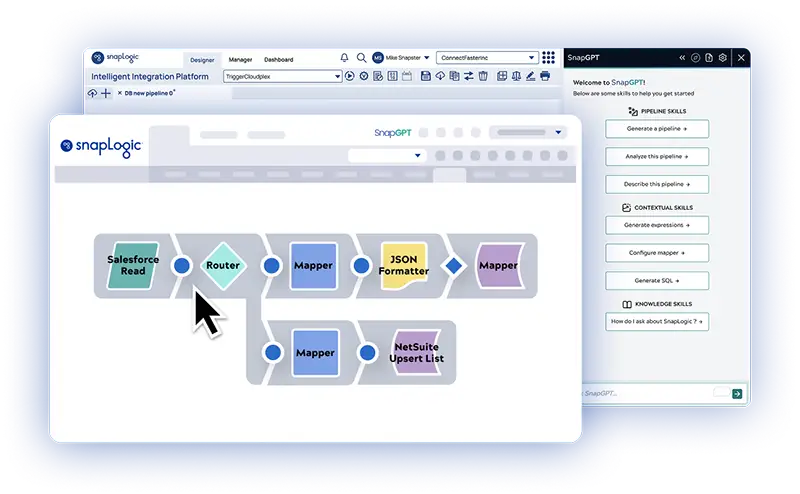
An iPaaS already understands how to communicate with hundreds of applications, databases, and APIs, spanning everything from legacy on-premises systems to modern SaaS platforms.
With native MCP support, that same breadth of connectivity becomes directly usable by AI agents as callable tools, without requiring engineering teams to write and maintain custom wrapper code for every system an agent might need to touch. An agent can query a CRM for account history, update a ticketing system with a resolution, or pull financial figures from a data warehouse, all through the same secure, pre-built connections the integration team has already built and validated over time.
This matters because bespoke API integrations built directly into an agent framework tend to multiply quickly as agent use cases grow. Every new agent, every new use case, and every new system creates another point of custom code to maintain. Native MCP support collapses that sprawl into a single, well-understood connectivity layer.
2. Security and governance travel with the integration
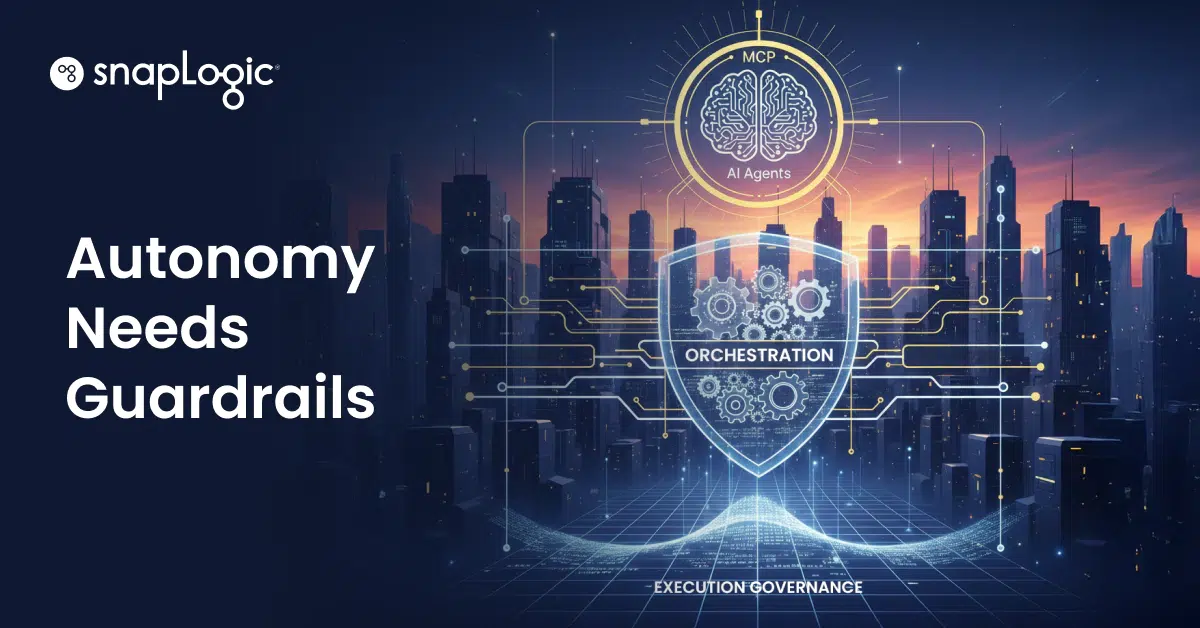
Every action an agent takes through an MCP-exposed tool inherits the authentication, authorization, and audit logging already configured inside the integration platform. Credentials stay centralized. Permissions stay scoped to what each connection is actually allowed to do. Every call an agent makes leaves a traceable record, which matters enormously when agents are acting on sensitive data or making changes to production systems.
This centralized model gives security and compliance teams a single control plane to review during audits and incident response. As agent adoption grows across departments, that consistency becomes a meaningful advantage.
3. Business logic becomes reusable across pipelines and agents
Most enterprises have spent years building integration pipelines that clean data, enforce validation rules, transform formats, and handle edge cases that only reveal themselves in production.
That accumulated logic represents real institutional knowledge. An iPaaS with native MCP support exposes that same logic directly to AI agents as callable tools, so the pipeline that already feeds a reporting dashboard or a customer-facing application can serve an agent’s request just as reliably.
Development teams extend pipelines that have already been tested against real-world data, applying their effort toward building new capabilities and expanding what the integration layer can do.
4. Faster time to value for agentic use cases
Standing up a new AI agent workflow traditionally requires custom integration work for every system it needs to reach, along with testing, security review, and ongoing maintenance for each of those connections. That work often takes months, which slows the pace at which organizations can experiment with and deploy agentic use cases.
When MCP support is native to the integration platform, much of that groundwork disappears. Teams can prototype an agent that reads inventory levels, checks pricing rules, triggers a fulfillment workflow, and writes confirmation data back to source systems, all in a matter of days, because the connectivity, security, and monitoring layers already exist and simply need to be exposed as tools.
5. One platform for traditional and agentic integration
Traditional integration and agentic AI are converging into a single operating model for enterprise automation. Deterministic workflows, the kind that move data on a schedule or in response to a defined trigger, continue to run the backbone of enterprise operations. Alongside them, adaptive agent-driven workflows are becoming a second automation style, one that responds dynamically to context and makes decisions in real time.
Organizations need infrastructure that supports both without maintaining two separate technology stacks, two separate monitoring systems, and two separate teams. A platform with native MCP support lets both automation styles run side by side, using the same connectors, the same observability tools, and the same operational practices. That shared foundation makes it far easier to expand AI initiatives over time while keeping the overall technology footprint manageable.
Strengthening your integration strategy
None of these benefits require an organization to abandon its existing infrastructure or start an AI strategy from a blank page. They come from extending a platform that already understands enterprise systems, data, and rules, and giving AI agents a governed, well-tested way to work within that same foundation.
As more business processes shift from purely human-triggered to a mix of human and agent-triggered action, the organizations that move fastest will be the ones whose integration layer already speaks the language their agents need to succeed.
Native MCP support is what makes that possible. It turns an iPaaS from a tool focused purely on moving data between systems into the connective foundation for the next generation of intelligent, action-taking applications, giving technology and software companies a practical, low-risk path into agentic AI built on infrastructure they already trust.
The platform for agentic AI
SnapLogic’s unified integration platform already provides the connectivity, governance, and monitoring described, built over years of connecting enterprise systems for customers across industries. Its library of pre-built connectors, its centralized security model, and its existing pipeline logic give organizations a proven foundation to extend into agentic AI.
With native MCP support, SnapLogic exposes that same trusted connectivity directly to AI agents as callable tools, letting teams bring agentic use cases into production using infrastructure they already operate and understand. For organizations evaluating how to connect AI agents safely and efficiently to real business systems, that combination of established platform strength and native agent readiness offers a practical starting point.
Ready to see how this works in practice? Whether you’re looking to explore the interface on your own or discuss specific integration challenges, we have options to help you get started. Take a self-guided platform tour to see our native MCP support in action, or book a personalized demo with our embedded integration team to discuss how to accelerate your agentic AI initiatives.