





The 2026 Agentic Enterprise Readiness Index
AI’s Promise Meets the Value Test
Enterprises are ready to scale agentic AI, but proving its business impact remains the bigger challenge
The agentic AI reality
Enterprise AI has moved quickly. In only a few years, the conversation has shifted from experimentation with generative AI to a much bigger ambition: AI agents that can take action, work across systems, execute multi-step processes, and become part of the day-to-day machinery of the enterprise.
That shift changes the question leaders need to ask. It is no longer enough to know whether an organization is experimenting with AI, or even whether it has the technical capability to deploy it. As AI agents move closer to real business processes, organizations need to know whether they can connect them to the right data and systems, govern their actions, understand their costs and, ultimately, prove that they are creating business value.
To understand how prepared enterprises are for that next stage, SnapLogic worked with market research firm 3GEM to survey 1,000 respondents across the UK, US and Germany and build The Agentic Enterprise Readiness Index.
The Agentic Enterprise Readiness Index examines five dimensions of readiness:
- Agent Readiness
- Integration & Orchestration Readiness
- Governance & Trust Readiness
- Economic Readiness
- Value Realization Readiness
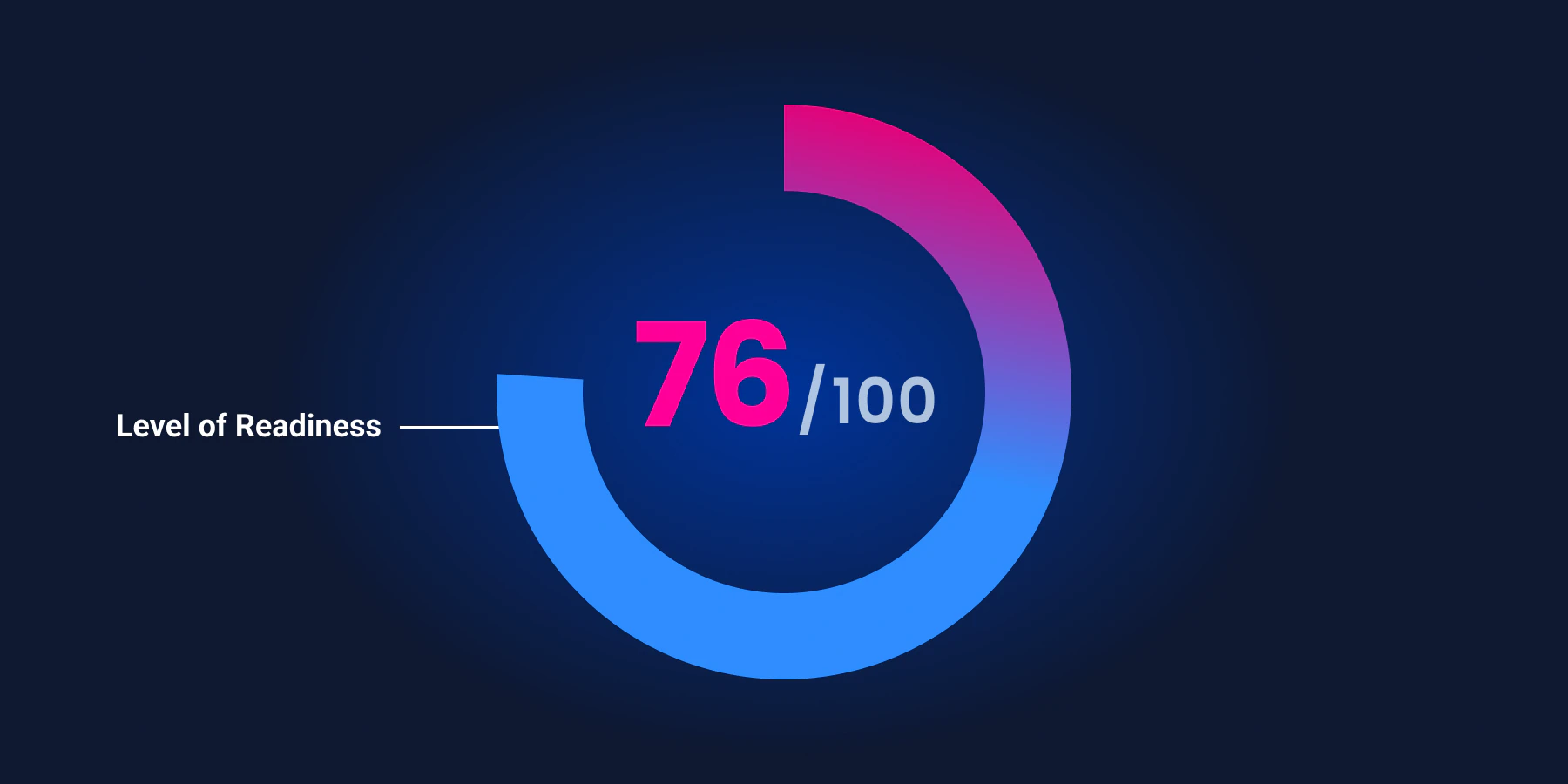
At first glance, the picture is encouraging. On average, organizations are ranking at 76 out of 100 (Fig. 1) in the Agentic Enterprise Readiness Index, as they report particularly strong readiness around governance and trust, agent adoption, and economics. But underneath that confidence is a striking contradiction.
Figure 1. Average ranking in the Agentic Enterprise Readiness Index
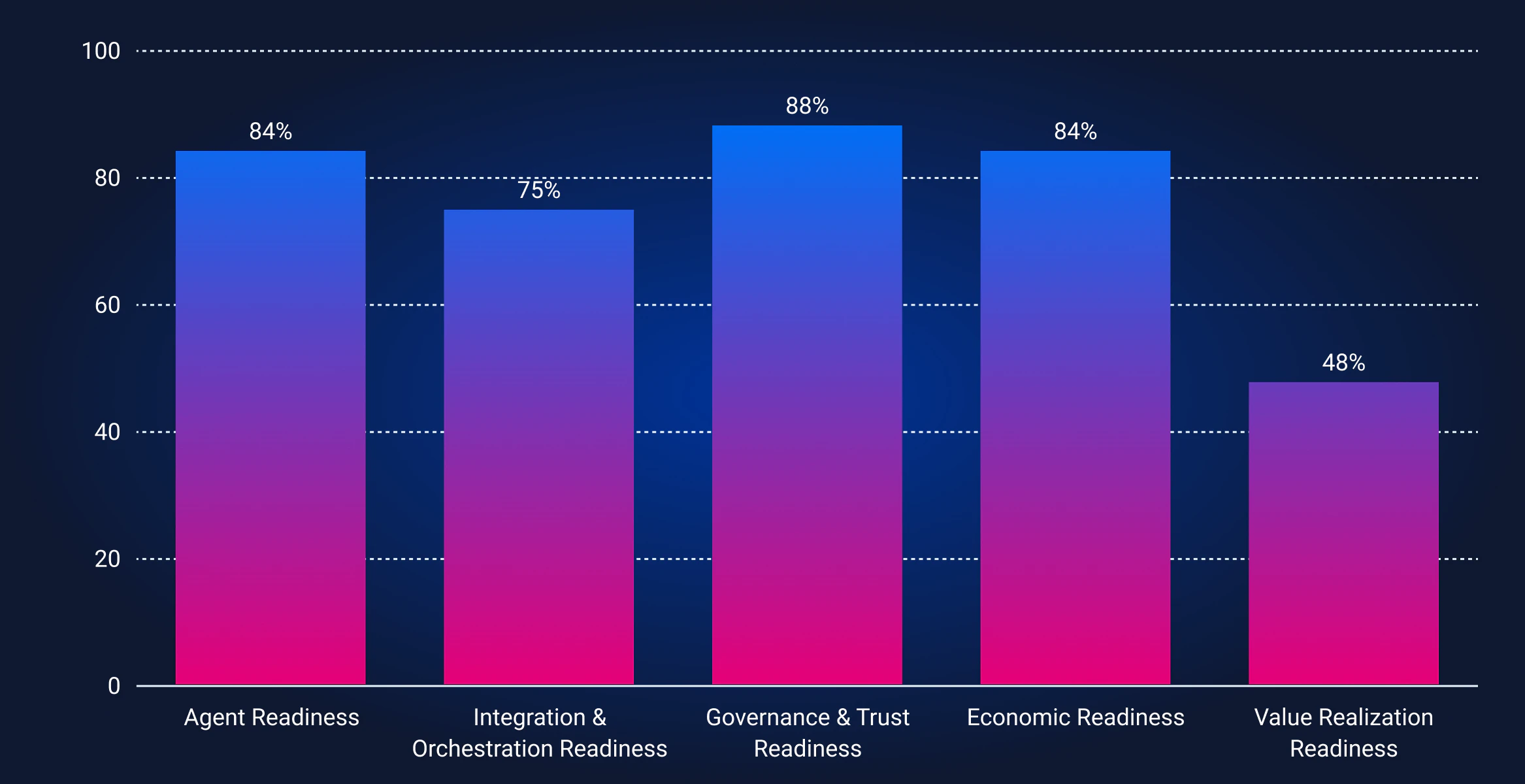
Value Realization Readiness scores just 48, far below Governance & Trust Readiness at 88, Agent Readiness at 84, Economic Readiness at 84, and Integration & Orchestration Readiness at 75 (Fig. 2).
Figure 2. Agentic Enterprise Readiness Index Contributors
In other words, enterprises increasingly look AI-ready, but their ability to prove the business value of that investment has not kept pace.
This is the AI Value Gap.
That gap matters, because agentic AI raises the stakes. An AI tool that helps an individual draft an email is one thing. An agent that can access enterprise data, invoke applications, make decisions, and execute a workflow is another. The more deeply AI becomes embedded in a business’s operating model, the more important it is to understand not only whether it works, but what it costs, how it is governed, and whether it produces outcomes worth scaling.
The readiness paradox
The strongest signal in the research is not a lack of confidence. It is the opposite. Across much of the index, organizations believe they have made meaningful progress toward an agentic future.
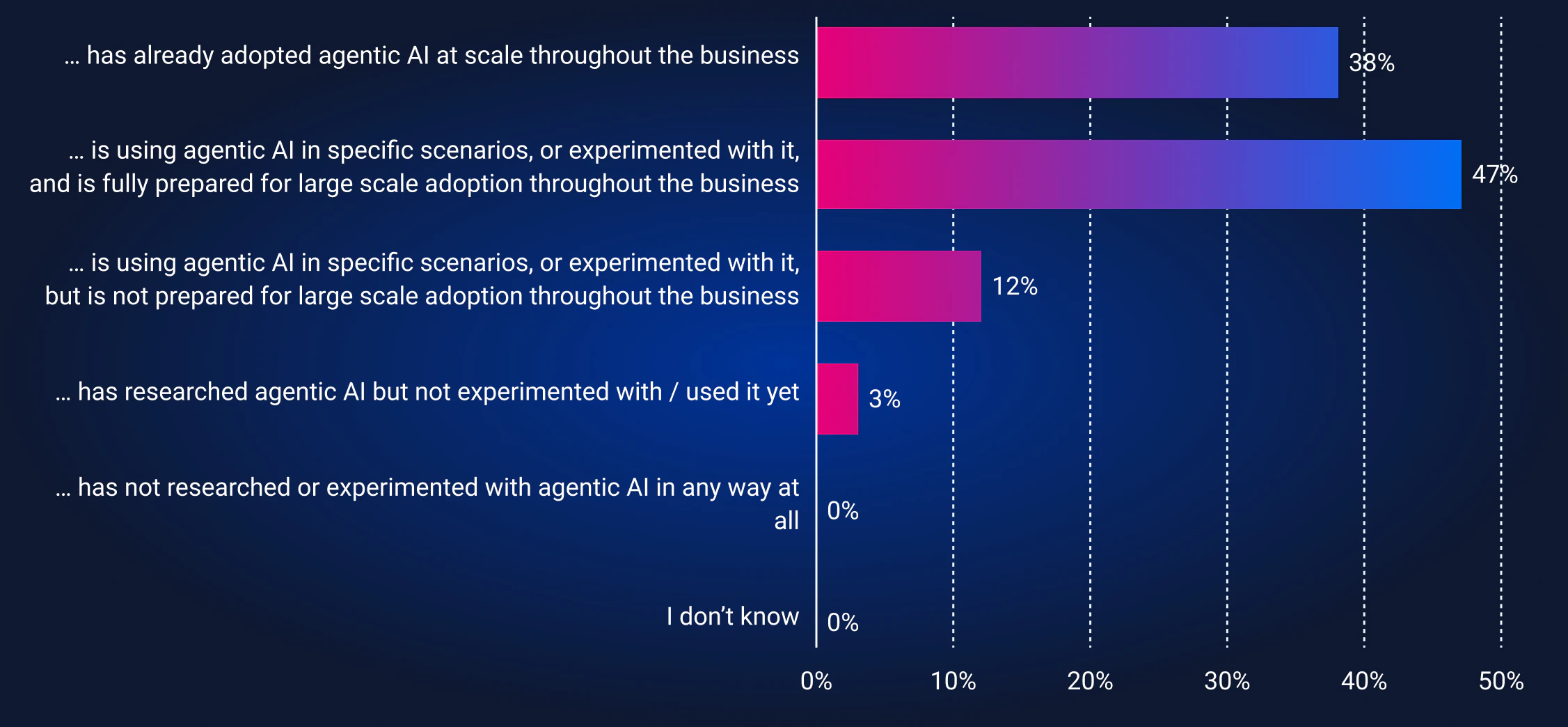
Eighty-five percent say they have either already adopted agentic AI at scale or are using or experimenting with it in specific scenarios and are fully prepared for large-scale adoption (Fig. 3). A further 85% are extremely or very confident in their organization’s ability to implement or increase AI agent usage across the business.
Figure 3. Which of these best describes your organization’s current approach to using agentic AI systems?
The foundations also appear comparatively mature. Eighty-three percent report either a comprehensive organization-wide framework and governance structure for AI agent ownership and management, or a formal approach used across most of the organization. Ninety-three percent have a comprehensive AI-agent policy or framework, or a policy/framework covering most areas of the business.
Taken together, those findings suggest that many organizations no longer see agentic AI as an experimental technology sitting at the edge of the enterprise. They are preparing for it to become part of how work gets done.
Yet readiness to deploy is not the same as readiness to create value. The 28-point gap between the overall Agentic Enterprise Readiness Index of 76 and Value Realization Readiness of 48 is the clearest indication that enterprise AI maturity is becoming uneven. Organizations can be confident in their technology, policies, and plans while still struggling to answer the question that ultimately determines whether an AI initiative survives: what did it deliver?
Ready to scale
The adoption data shows how quickly agentic AI is moving toward the enterprise mainstream. Thirty-eight percent say agentic AI has already been adopted at scale throughout their business (Fig. 3). Another 47% are using or experimenting with agentic AI in specific scenarios and say they are fully prepared for large-scale adoption (Fig. 3).
That confidence extends beyond current deployment. Fifty percent say they are very confident and 36% extremely confident in their ability to implement or increase AI agent usage across the business. Only 2% describe themselves as not very confident or not confident at all.
Investment is following that confidence, although not always at the same pace as operational maturity. More than a third of respondents, 36%, say their organization is investing faster than it can effectively govern and operationalize AI agents (Fig. 4). A further 54% say investment and operationalization are broadly aligned (Fig. 4).
Figure 4. Which best describes how much your organization is investing in order to increase AI agent usage across the business?
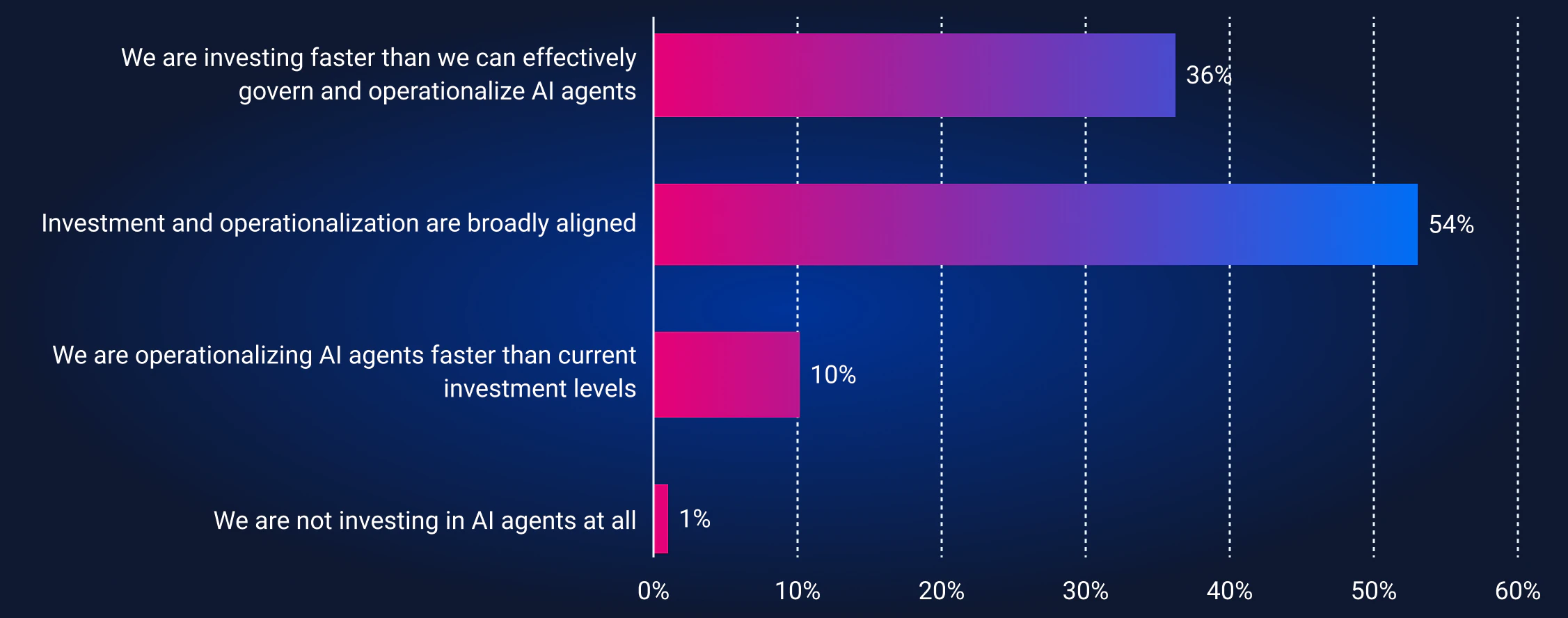
That balance differs markedly between markets. In the US, 44% say investment is moving faster than their ability to govern and operationalize AI agents, compared with 39% in the UK and 23% in Germany. German organizations are instead more likely to report that investment and operationalization are broadly aligned, at 66%, compared with 52% in the UK and 45% in the US.
That finding is an early warning sign. The ability to fund AI does not guarantee the ability to absorb it. As organizations move from a small number of pilots to multiple agents operating across teams and systems, the challenge becomes less about acquiring AI capability and more about turning it into reliable enterprise infrastructure.
Integration: From isolated agents to enterprise workflows
For an AI agent to create meaningful enterprise value, it needs context. That context lives across applications, data stores, APIs, and business processes. An agent that cannot reach the systems where work happens is limited to isolated tasks; an agent that can move safely across them can become part of an end-to-end workflow.
The research suggests organizations are making progress, but integration and orchestration remain less mature than several other dimensions of readiness. The Integration & Orchestration Readiness Index scores 75, compared with 84 for Agent Readiness, and 88 for Governance & Trust (Fig. 2).
Seventy-seven percent say their AI agents have, or would have, full or extensive access to the relevant data or systems needed to maximize their effectiveness (Fig. 5). Seventy-four percent say agents are, or would be, able to operate across all or most departments and functions. The same proportion, 74%, say agents can, or would be able to, independently complete end-to-end workflows or complete most workflows end-to-end with only occasional human input.
Figure 5. What level of access do your AI Agents have to the data or systems needed to maximize their effectiveness?
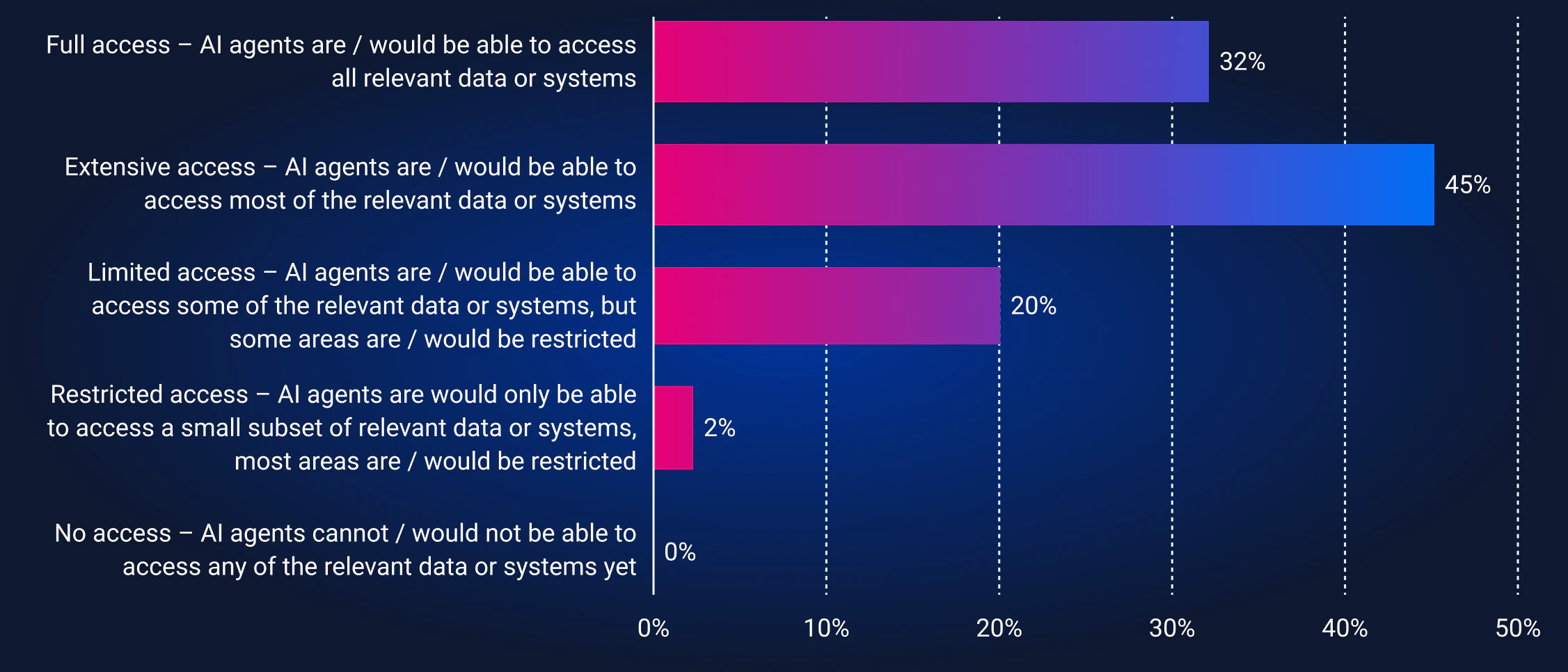
That readiness varies considerably between markets. US organizations score 80 for Integration & Orchestration Readiness, compared with 76 in the UK and 68 in Germany. The 12-point difference between the US and Germany is notably larger than the regional variation for Agent Readiness overall, suggesting that while organizations across all three markets report similar preparedness to adopt AI agents, their ability to connect and orchestrate those agents across the enterprise is developing at different rates.
Those are substantial numbers, but they also expose the remaining gap. Roughly one in four organizations does not yet report the highest levels of cross-functional orchestration or end-to-end execution. As agentic AI scales, that gap can become the difference between an impressive demonstration and a system that changes how the business operates.
This is why integration is becoming part of the AI architecture itself.
SnapLogic’s Agentic Integration and Applied AI Platform connects applications, data, APIs, and AI agents across cloud, on-premises, and hybrid environments. Its orchestration, governance, and operational controls help organizations move AI into production. SnapLogic MCP capabilities can also expose existing integrations and business processes as governed tools that AI agents can discover and invoke, helping connect agentic systems to the enterprise capabilities they need.
Real-world example: SnapLogic Finance Team
SnapLogic’s own finance and accounting team demonstrates how connecting AI to enterprise systems can translate into measurable business value. The team faced a time-consuming process of reconciling customer contracts with financial data, requiring manual review of information across unstructured documents and enterprise applications. Using SnapLogic AgentCreator, the team automated the extraction of contract information from PDF order forms and its reconciliation with customer records in Salesforce, helping identify discrepancies, improve data accuracy and streamline financial operations.
By integrating AI-powered automation into existing enterprise workflows, the team reduced manual reconciliation effort by 90% and accelerated its month-end financial close by 30%. The process also helped recover approximately 2% of revenue, representing millions of dollars that might otherwise have gone uncollected. Beyond improving efficiency, the initiative demonstrates how AI can deliver tangible financial returns when connected to the systems and processes where business value is created. Rather than deploying AI as an isolated capability, SnapLogic’s finance team used it to address a specific operational challenge, turning existing enterprise data into measurable improvements in productivity and financial performance.
Governance and trust are moving ahead
Governance has dominated much of the enterprise AI debate, and for good reason. The more autonomy an agent has, the more important it becomes to know what it can access, what actions it takes, and who is accountable for its behavior.
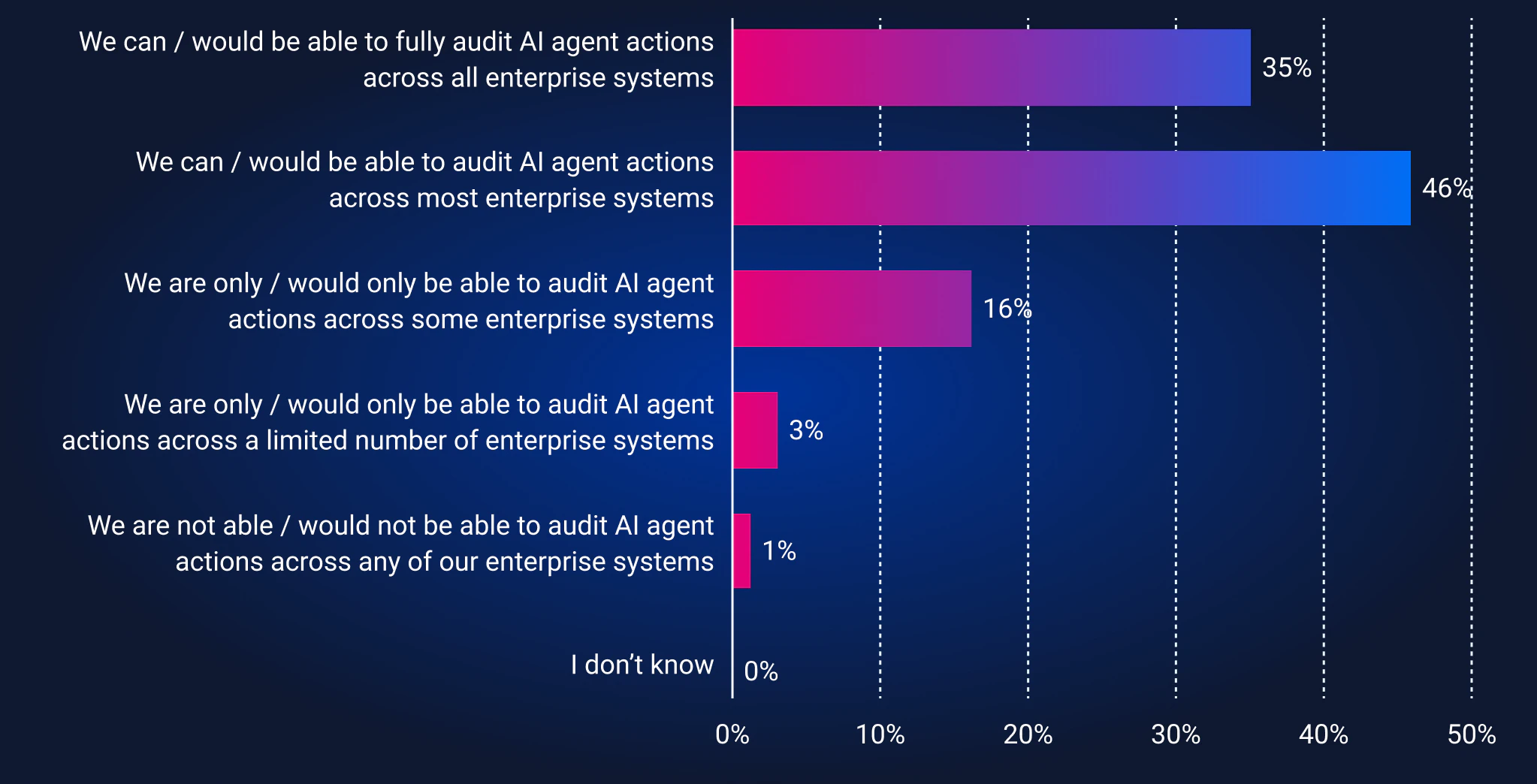
Yet the research suggests governance may be moving from a perceived barrier to a more established part of enterprise AI planning. Governance & Trust is the strongest dimension in the index, scoring 88. Thirty-five percent say they can, or would be able to, fully audit AI agent actions across all enterprise systems, while a further 46% can, or would be able to, audit them across most enterprise systems (Fig. 6). Ninety-three percent report a comprehensive AI-agent policy or framework, or one covering most areas of the business.
Figure 6. To what extent is your organization able to understand and monitor AI agent actions across enterprise systems throughout the organization?
Trust is similarly high. Ninety percent agree that they trust, or would trust, the work conducted and outputs produced by AI agents within their organization.
These findings should not be read as evidence that governance is finished. Agentic AI introduces new questions around identity, permissions, auditability, data access, and accountability as agents move between systems and take action. But compared with other dimensions of agentic readiness, governance does not appear to be where organizations perceive their biggest readiness gap. Instead, the findings suggest many have already begun putting the policies, controls and trust required for wider adoption in place.
The economics of agentic AI
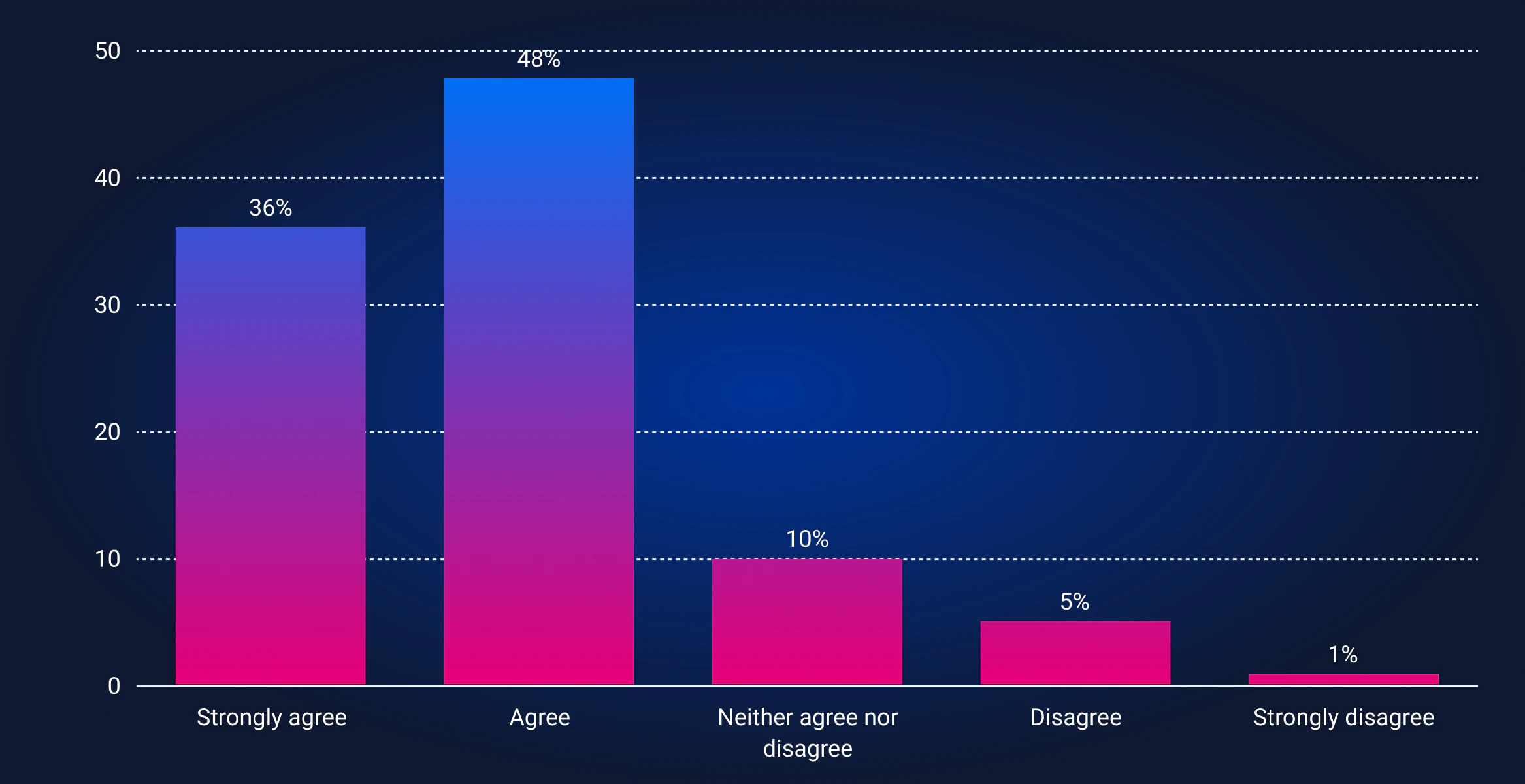
As governance becomes more established, AI economics presents a more complicated picture. On paper, organizations feel well prepared. Economic Readiness scores 84. Eighty-five percent agree that day-to-day users of agentic AI understand, or would understand, how the cost of using it is calculated through token consumption (Fig. 7). Additionally, 88% agree it is clear, or would be clear, who is responsible for owning and managing the budget for AI-agent spend across the business.
Figure 7. The people who use / would be most likely to use, agentic AI within my organization on a day-to-day basis, would understand how the cost of using it is calculated through token consumption by the agent provider.
Cost visibility also appears strong. Eighty-one percent say they can, or expect they could, track the cost of each AI agent very or fairly accurately, while 84% say they are confident they can accurately forecast future AI-agent spending and token consumption, or are reasonably well equipped to do so even if forecasts are not always accurate.
As with integration and orchestration, that confidence is not evenly distributed across markets. Economic Readiness scores 87 in the US and 86 in the UK, compared with 79 in Germany. The difference suggests that while organizations across all three markets report relatively strong economic readiness, German respondents are less confident overall in the structures and capabilities needed to understand, manage, and forecast the economics of agentic AI.
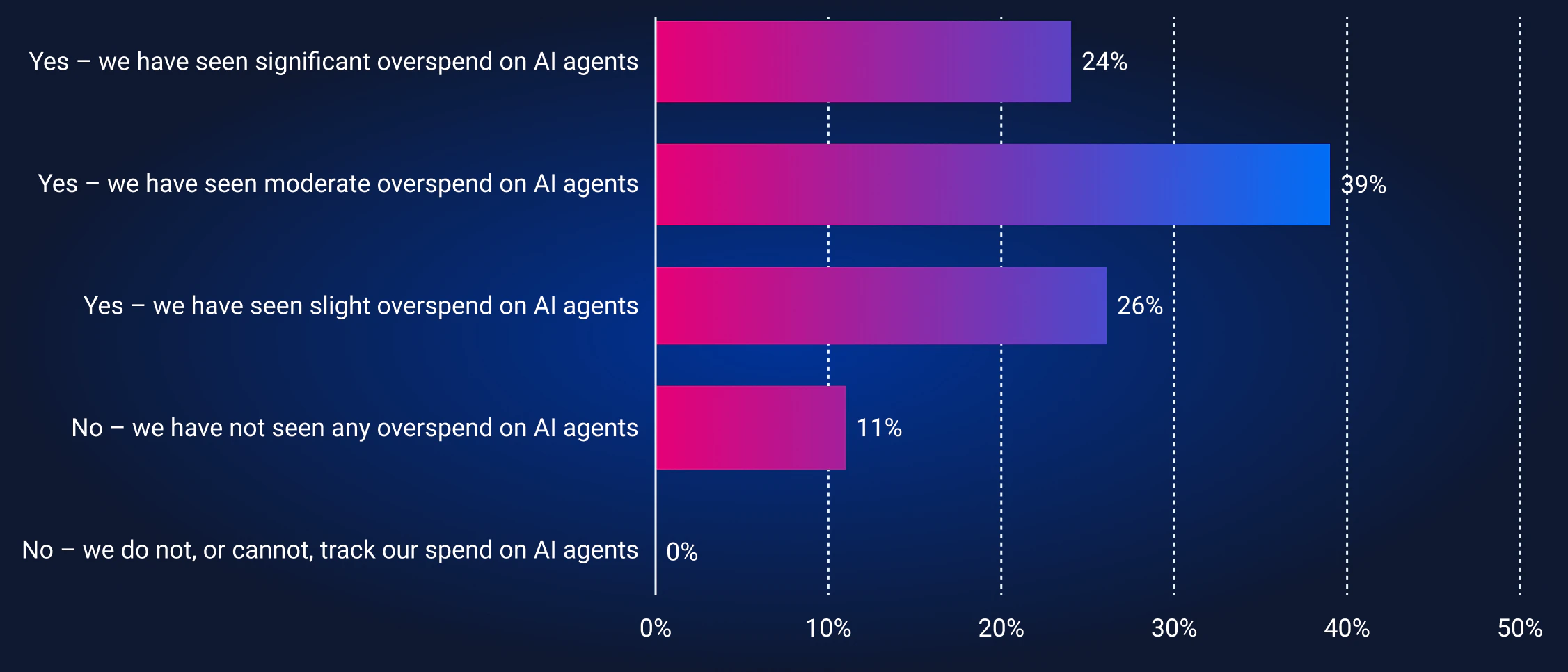
But actual spending experience complicates that confidence. Among respondents answering the overspend question, 89% say their organization has experienced overspend on AI agents (Fig. 8), with nearly two-thirds, 63%, reporting significant or moderate overspend.
There is a similar tension in budgeting. Thirty-nine percent say agentic AI deployment costs have largely been in line with expectations, while 46% say they have generally remained within budget but some costs were higher than expected. Another 12% report unexpected costs that took them over budget, although not enough to significantly affect deployments.
The lesson is not that enterprises cannot manage AI spend. It is that agentic AI introduces a new and potentially more dynamic cost model. Consumption can vary with model choice, task complexity, workflow design, agent behavior, and the number of systems or calls involved. As agents proliferate, organizations need visibility that connects consumption to the business process and outcome it supports. Cost without context is simply another bill; cost tied to value becomes an investment decision.
Figure 8. Has your organization ever experienced costs associated with AI agents exceed expectations and/or budget?
The value gap
This is where the readiness story changes most dramatically.
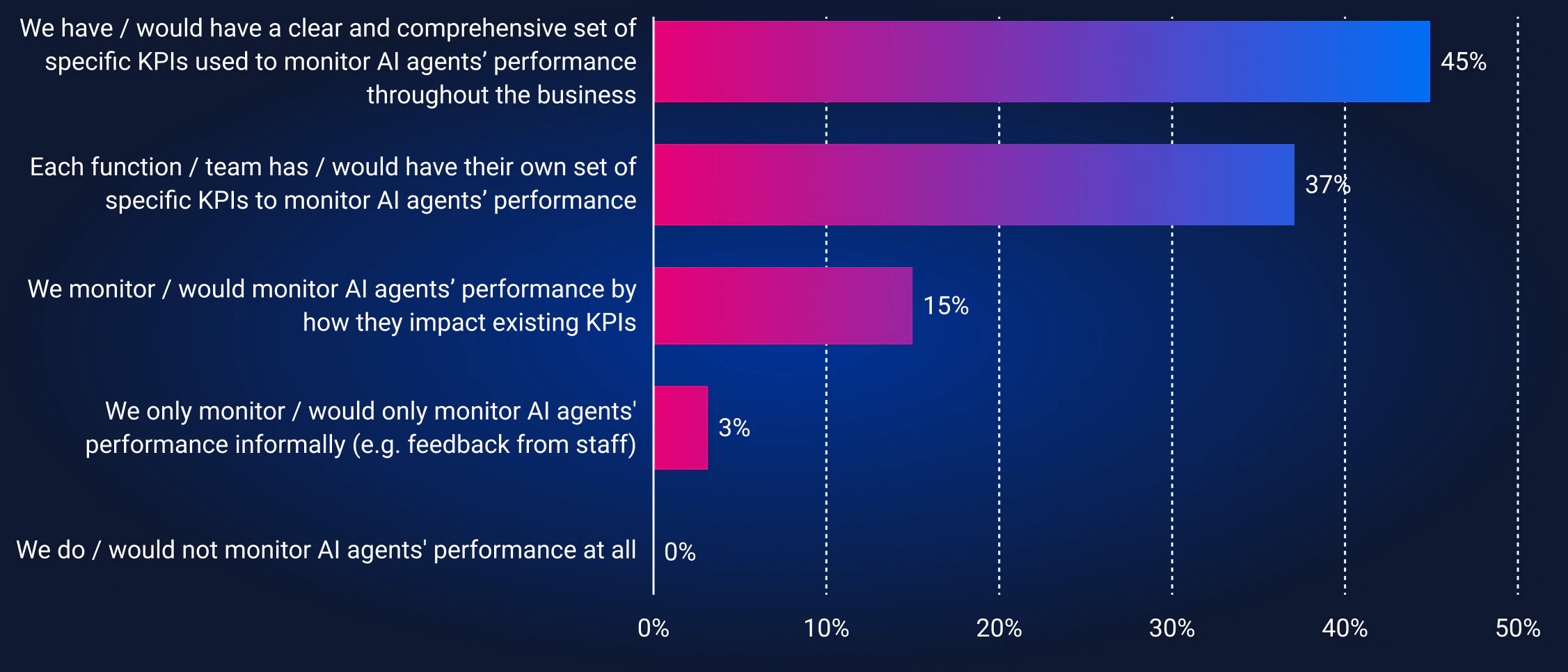
On the surface, organizations appear disciplined about performance. Eighty-two percent say they have, or would have, either a clear and comprehensive set of specific KPIs for monitoring AI-agent performance throughout the business or team/function-specific KPIs (Fig. 9). Almost all respondents, 97%, say they would use those approaches or measure AI agents by their impact on existing KPIs.
Figure 9. How does your organization track performance of AI agents throughout the business?
Yet when the questions move from tracking performance to proving business value, confidence drops.
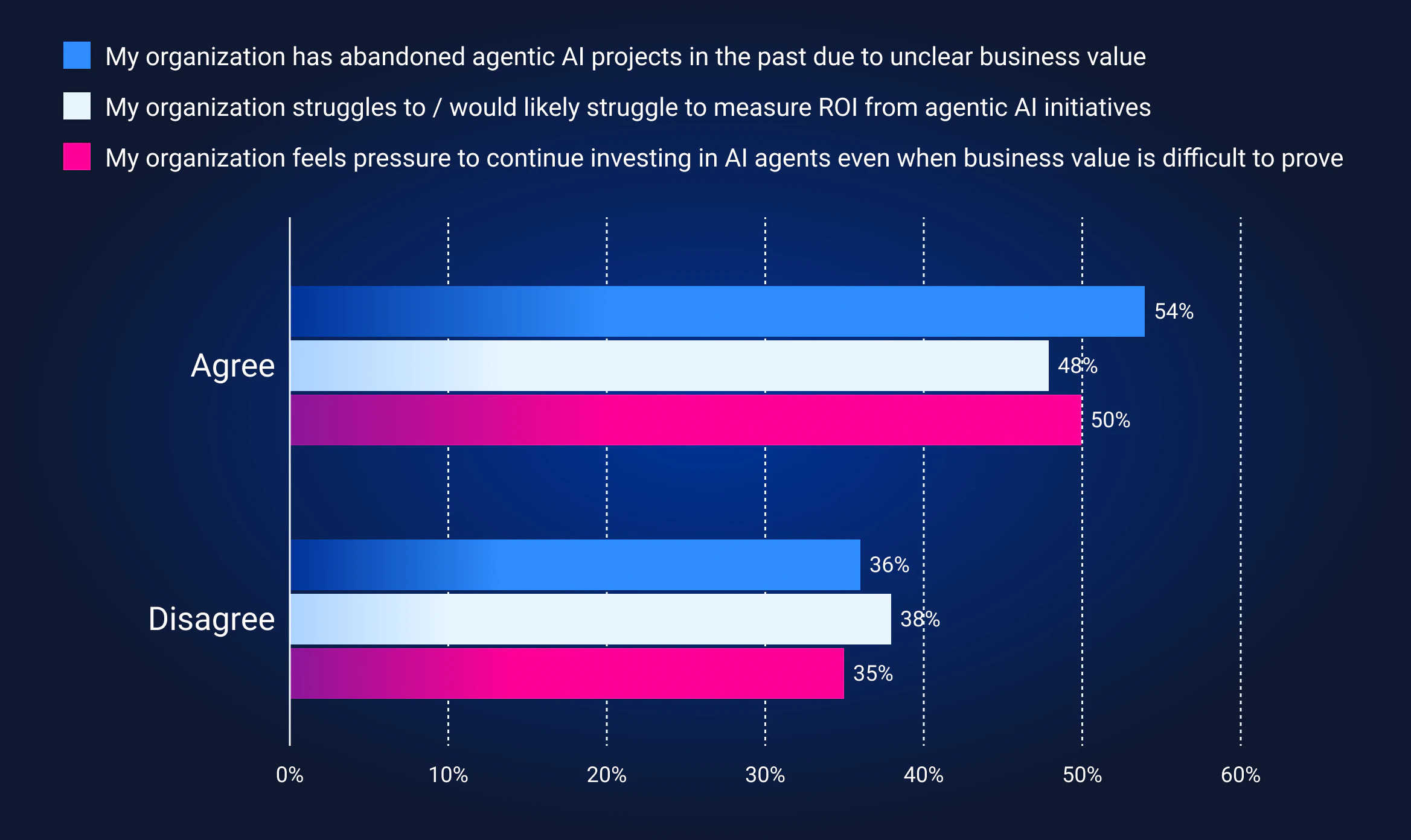
More than half, 54%, agree that their organization has abandoned agentic AI projects in the past due to unclear business value (Fig. 10). Forty-eight percent agree that their organization struggles, or would likely struggle, to measure ROI from agentic AI initiatives (Fig. 10). Half (50%), agree that their organization feels pressure to continue investing in AI agents even when business value is difficult to prove (Fig. 10).
Those answers drive the Value Realization Readiness Index down to 48, by far the lowest of the five readiness dimensions.
Figure 10. To what extent do you agree or disagree with the following?
Unlike some other dimensions of readiness, the value gap is also remarkably consistent across markets. Value Realization Readiness scores 50 in the UK and just 46 in both the US and Germany. This is particularly striking in the US, which scores 80 for Integration & Orchestration Readiness and 87 for Economic Readiness. Despite reporting stronger readiness in these areas, US organizations show no corresponding advantage in Value Realization Readiness, scoring the same 46 as Germany.
This distinction between performance and value is critical. An AI agent can complete a task successfully without creating enough value to justify its cost. It can reduce handling time while creating additional review work elsewhere. It can achieve a technical KPI while failing to change a business outcome. And it can look successful in a pilot while proving too expensive, disconnected, or difficult to govern when deployed more widely.
That is why the next stage of enterprise AI maturity needs a more demanding definition of success. The question is not simply: did the agent work? It is: did the workflow improve, did the business outcome change, what did that improvement cost, and is the result repeatable at scale?
The data also reveals a difficult dynamic for leaders. Half of organizations feel pressure to continue investing even when value is difficult to prove, while 36% say investment is already moving faster than their ability to effectively govern and operationalize AI agents. Put together, those findings suggest a risk of activity becoming a proxy for progress. More agents, more pilots, and more spend can create the appearance of momentum without answering whether the organization is becoming more productive, efficient, or capable as a result.
Customer example

Cambridge & Counties Bank (CCB) provides an example of what value realization can look like when AI investment starts with a clearly defined business outcome. The specialist lender is using agentic AI built on its existing SnapLogic integrations to automate non-value-add steps within its asset-finance lending process, including intake, credit and AML activity, while keeping humans responsible for higher-value decisions. With brokers increasingly expecting same-day responses, CCB is targeting a 3x increase in lending capability, with the ambition to grow its asset-finance business from £100 million to £300 million without adding headcount. Existing SnapLogic integrations with services including Companies House, Creditsafe and Experian, alongside CCB’s core banking systems, provide the foundation for a modular set of AI agents, helping the bank turn existing integration investments into additional operational capacity rather than starting again with new infrastructure.
The approach demonstrates the shift from deploying AI for its own sake to connecting agentic AI to a specific, measurable business objective: increasing lending capacity while freeing employees from administrative work to focus on higher-value broker and customer relationships.
What organizations should do next
The research does not point to a need for enterprises to slow down AI adoption. It points to a need to mature how adoption is connected to outcomes. Five priorities stand out.
1
Start with the business outcome, not the agent
Before deciding which model, agent framework, or interface to deploy, define the outcome the organization wants to change. That might be cycle time, cost per transaction, error rate, revenue conversion, customer response time, or another business measure. Establish the baseline before deployment, assign an owner to the outcome, and define what level of improvement would justify scaling.
This matters because 54% have abandoned agentic AI projects due to unclear business value, despite 82% reporting clear enterprise-wide or team-specific AI-agent KPIs. The gap suggests that measuring agent performance is not always the same as measuring business impact.
2
Connect agents to the systems where value is created
Agents need access to enterprise context and the ability to act across workflows. Seventy-seven percent report full or extensive access to relevant data and systems, but Integration & Orchestration Readiness still trails the strongest index dimensions at 75.
Organizations should identify the applications, APIs, data, and processes required for each priority outcome, then build reusable, governed integration capabilities rather than one-off connections for individual AI projects. This is particularly important as MCP and other agent connectivity patterns make it easier for agents to discover and invoke enterprise tools.
3
Make governance operational
Policies matter, but agentic governance has to follow the agent into execution. Organizations need clear identity, permissions, access policies, audit trails, and monitoring across the systems agents touch. The strong Governance & Trust score of 88 provides a positive foundation, but the operational challenge grows as agents become more autonomous and cross-functional.
The goal is not to remove human oversight everywhere. It is to make autonomy deliberate: organizations should know where an agent can act independently, where approval is required, and how actions can be reconstructed when something goes wrong.
4
Treat AI economics as part of workflow design
Eighty-four percent report strong Economic Readiness, yet 89% of those answering the overspend question have experienced at least some AI-agent overspend. Organizations therefore need to connect token and model consumption to individual agents, workflows and outcomes, rather than treating AI cost as a single infrastructure line item.
Model choice, prompt design, workflow structure and unnecessary calls can all affect consumption. Cost controls should therefore be designed into the AI operating model alongside performance and governance, with thresholds and review points that help teams decide when to optimize, redesign or stop an initiative.
5
Measure, learn and scale what works
AI portfolios need permission to stop as well as permission to scale. Clear value gates can prevent organizations from continuing projects because of sunk cost, competitive anxiety, or pressure to demonstrate AI activity.
Start with measurable use cases, compare results against a baseline, and scale only when the outcome is repeatable. Successful patterns can then be reused across departments and workflows, reducing the cost and effort of each subsequent deployment. This is how AI capability can compound: not through an ever-growing collection of disconnected pilots, but through reusable integrations, governed tools, proven patterns, and measurable outcomes.
From AI readiness to AI value
Enterprise AI has reached an important transition point. Organizations report high confidence in scaling agent adoption, strong governance and trust, and a growing ability to connect agents to enterprise systems and manage their economics.
But readiness is only the beginning. The clearest message from the 2026 Agentic Enterprise Readiness Index is that the ability to deploy AI is moving faster than the ability to prove what it delivers. Value Realization Readiness sits at 48, while every other dimension scores 75 or higher. More than half have already abandoned projects because business value was unclear, and half feel pressure to keep investing even when that value is difficult to prove.
The next phase of the agentic enterprise will therefore be defined less by how many agents an organization can build and more by how effectively those agents can be connected, governed, measured, and improved.
AI readiness asks whether the enterprise can deploy the technology. AI value asks whether the technology makes the enterprise better.
The organizations that can answer both questions will be the ones best placed to turn agentic AI from experimentation into lasting business advantage.
About the research
This research was conducted by 3GEM on behalf of SnapLogic between July 21 and August 4, 2026. It surveyed 1,000 IT decision-makers in enterprises across the US (350), UK (350), and Germany (300). The Agentic Enterprise Readiness Index is based on survey questions covering Agent Readiness (Q1-Q3), Integration & Orchestration Readiness (Q5-Q7), Governance & Trust Readiness (Q8-Q10), Economic Readiness (Q11-Q12c), and Value Realization Readiness (Q14-Q15).
About 3GEM
Established in 2015, 3Gem Research and Insights are full-service suppliers of online market research, with large and engaged consumer and B2B online panels in over 65 countries worldwide. Adhering to MRS guidelines and ESOMAR accredited, 3Gem design creative research solutions which produce robust and actionable insights; the data is typically used to form the basis of impactful thought leadership campaigns, or to help businesses make high-level business decisions with full confidence. As a boutique agency with far reaching capabilities, 3Gem delivers integrated research and media solutions quickly and cost-effectively, and are the “go-to” agency for many industry-leading brands and agencies, operating across a diverse range of sectors.

How ready is your organization for agentic AI?
Take the Agentic Enterprise Readiness Assessment yourself to benchmark your own readiness.