


One of the most commonly used terms in enterprise AI right now is “agentic workflow,” so it’s worth being specific about what it actually describes. It’s a process where one or more AI agents plan a sequence of steps, take actions across systems, evaluate the result, and adjust course without a human clicking “next” at every stage. That’s what allows an agent to behave more like a colleague handling a task end-to-end rather than a tool waiting to be told what to do next.
The plumbing matters as much as the model here. These are the workflows that decide what an agent is allowed to do, in what order, with what guardrails, and against which systems. Without a reliable integration and orchestration layer underneath, even the most capable AI model stalls at the first system boundary it can’t cross. The workflows below are where that combination of model intelligence and integration infrastructure is actually paying off in production.
Here are 10 agentic workflow patterns most common in enterprise deployments right now.
1. Autonomous data reconciliation
An agent compares records across two or more systems, such as an ERP and a CRM, flags mismatches, researches the likely cause (a failed sync, a duplicate entry, a stale field), and either auto-corrects low-risk discrepancies or routes high-risk ones to a human with a proposed fix attached.
Why it matters: Reconciliation used to be a monthly spreadsheet exercise for finance operations. Agentic versions run continuously, which turns closing the books into a routine, low-drama step.
Get the case study: “Enterprise Finance Team Delivers Business Value and Revives Operational Efficiency With AgentCreator”
2. Multi-agent customer support triage
A router agent classifies an incoming ticket and routes it to a specialist agent for billing, technical, or churn-risk issues. The specialist agent pulls account history, drafts a resolution, and escalates only what genuinely requires human judgment, with full context already attached.
Why it matters: Escalated tickets arrive at the human agent pre-researched, which speeds up resolution and reduces repetitive back-and-forth.
3. Self-healing integration pipelines
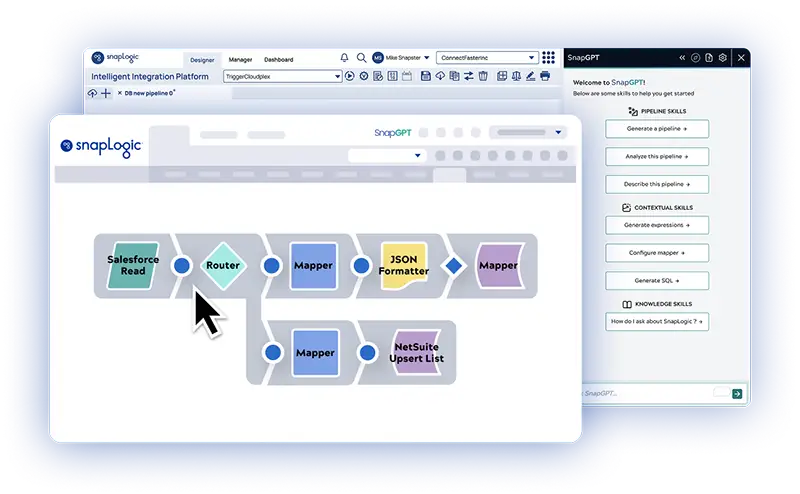
When an API schema changes, or a field goes missing, an agent inspects the failure, maps the new schema against the old contract, patches the mapping, re-runs the job, and logs the change for review so nobody gets paged at 2 a.m.
Why it matters: Brittle integrations are the single biggest hidden cost of enterprise IT. Agents that can absorb minor schema drift can meaningfully shrink the cost.
4. Continuous compliance monitoring
An agent continuously monitors transactions, access logs, and data flows against policies such as SOC 2 and GDPR, flagging violations in real-time while automatically assembling audit trails to eliminate the need for manual reconstruction during audit season.
Why it matters: Compliance findings that surface in real-time are relatively inexpensive to fix. The same findings discovered six months later during an audit are expensive and stressful.
5. Retrieval-augmented sales enablement
Ahead of a call, an agent pulls CRM history, recent support tickets, meeting transcripts, and relevant case studies, then assembles a briefing tailored to that specific account.
Why it matters: Reps spend less time hunting for context and more time actually talking to the customer.
Turn every sales call into an instant CRM update and a coaching report, no rep admin required. Learn more about the agentic sales-coaching workflow.
6. Automated incident response (AIOps)
When an alert fires, an agent correlates logs and metrics across services, identifies the likely root cause, and either executes a known remediation, such as a restart, rollback, or scale event, or drafts a runbook for the on-call engineer with the diagnosis already complete.
Why it matters: The mean time to resolution drops when the diagnostic legwork happens before a human is even paged.
7. Document understanding and contract extraction
An agent reads unstructured documents (e.g., contracts, invoices, claims), extracts structured fields, flags unusual clauses or terms against a baseline, and pushes clean data into downstream systems.
Why it matters: This is one of the few workflows where the ROI is trivially measurable: hours of manual review eliminated, per document, per week.
8. Dynamic pricing and inventory rebalancing
Agents monitor demand signals, competitor pricing, and stock levels across locations, then adjust pricing or trigger inventory transfers within pre-approved bounds that humans set as guardrails.
Why it matters: The value is in reaction speed. A pricing decision that takes a human team a day to approve can be irrelevant by the time it ships.
9. Code migration and refactoring agents
An agent reads a legacy codebase, maps dependencies, generates a migration plan, and executes it in reviewable chunks with tests run automatically at each step and a human approving before merge.
Why it matters: Migrations combine high context with high repetition, making them an ideal fit for agents that can maintain consistency across thousands of changes without losing focus.
Modernizing your integration stack is its own agentic workflow. See how the SnapLogic Intelligent Modernizer (SLIM) uses AI to migrate legacy pipelines
10. Cross-system master data stewardship
An agent owns the “golden record” problem by detecting duplicate or conflicting entities, such as a customer, a product, or a vendor, across systems, proposing a merge, and propagating the resolved record everywhere it is referenced.
Why it matters: Bad master data quietly corrupts downstream reports and automations. Agentic stewardship catches discrepancies at the source before they compound across systems and become far harder to resolve.
The foundation underneath
Every workflow above depends on the same unglamorous thing: agents need clean, governed, real-time access to enterprise systems, including data, APIs, and applications, or they end up making confident guesses. Getting that access layer right is what determines whether any of this actually works in production.
SnapLogic builds that access layer. Our Agentic Integration Platform connects AI agents directly to your enterprise systems, including SaaS apps, databases, APIs, and legacy platforms, with the governance, monitoring, and reliability needed to run agentic workflows on production data.