



For any modern SaaS company operating a usage-based model, the Model Context Protocol (MCP) feels transformative. It promises AI agents that can operate as an executive layer across the entire technology stack, autonomously resolving issues by invoking tools exposed by systems like Salesforce, Stripe, Snowflake, and Zendesk.
On the surface, this is exactly what MCP was designed to do. Each system exposes its capabilities as a tool, and the AI agent reasons about customer intent and executes the right sequence of actions. In demos, the result feels like magic: no handoffs, no tickets bouncing between teams, just intent translated directly into action.
However, this seamless execution, so compelling in a demo, quickly encounters friction in a complex, live production environment. The failure is not in the intelligence of the agent or the correctness of the individual tools, but in the lack of a governed execution layer that can manage the critical dependencies and complexities between them.
The flaw in the magic of the demo
To understand this friction, consider the execution of a simple, common scenario in a real-world, MCP-enabled environment. In a purely MCP-enabled environment, the agent acts instantly:
- Queries CRM for the account tier
- Checks Stripe to confirm the charge
- Inspects product logs to see if the feature was provisioned
- Calls a billing tool to issue a refund
- Calls a provisioning tool to disable the feature
- Updates the support ticket with a resolution
From a demonstration standpoint, this is the future: no handoffs, no bouncing tickets, just real-time execution. The agent transforms intent directly into action. But the failure doesn’t occur in any single call. It happens in the gaps between them.
The problem is architectural, not technical
The core issue is that while each tool is technically correct, they operate within a system defined by unseen, implicit dependencies:
- The provisioning tool assumes that billing has already been reversed
- The billing tool assumes the entitlement is still active at the moment of the refund
- The CRM update happens asynchronously
- The analytics system lags by several minutes
On a good day, the sequence works. On a bad day, the agent disables access before the billing system adjusts. Or it issues two refunds because the charge appears in two different systems. Or it retries the same resolution because the system state looks inconsistent after a customer reply.
The failure is not a “bug” in MCP. Every tool behaved exactly as exposed. The fundamental problem is that no one owns the process; they only own the parts. Now multiply this risk across every common business action. For example, upgrading an account, applying credits, or resolving a dispute. Each action becomes an independent MCP endpoint, creating a distributed web of dependencies that quickly turns automation into operational risk.
This is why engineering gets pulled into incidents rooted not in code defects, but in orchestration ambiguity. The system didn’t fail because the AI made a bad decision; it failed because execution was never designed as a system.
How orchestration turns MCP tools into reliable business actions
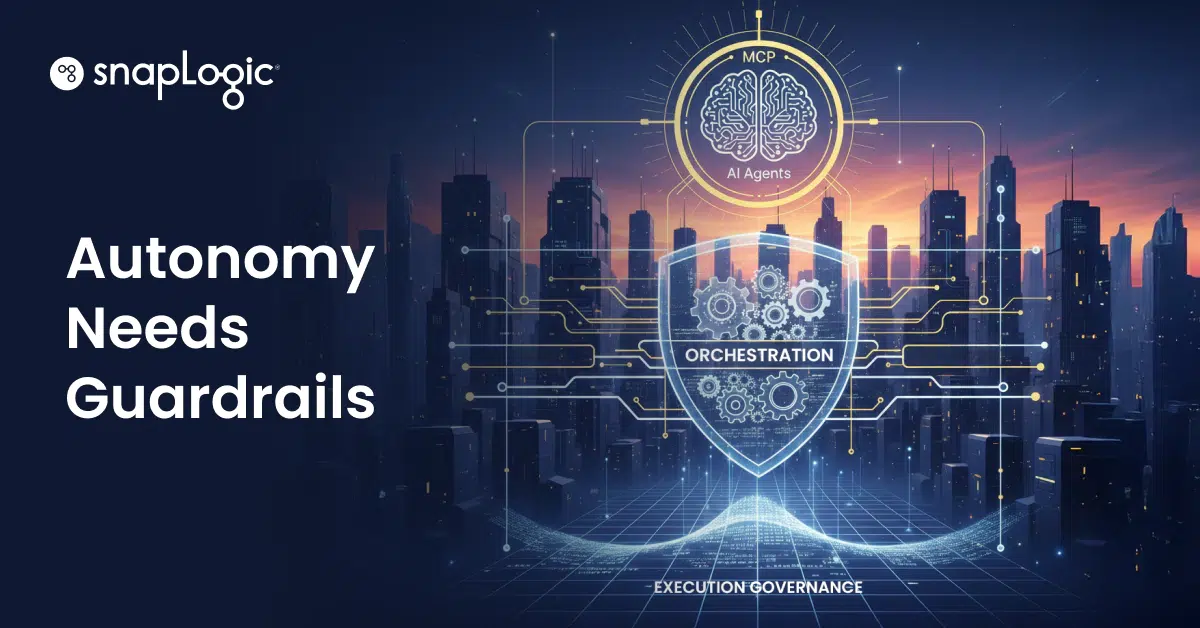
This is where AI ambition meets enterprise reality. The business does not want an agent improvising how refunds, entitlements, and notifications are sequenced. It wants the agent to decide what should happen and delegate how it happens to a governed execution layer.
That execution layer is integration and orchestration. It transforms dozens of low-level MCP tools into a single, reliable business capability, such as “Resolve billing dispute.” Behind that action, orchestration ensures systems are called in the correct order, failures are handled deterministically, data is validated, policies are enforced, and audits are logged. Humans are looped in when necessary, without breaking automation.
The agent remains autonomous, but it operates through a controlled execution fabric designed to absorb complexity rather than amplify it.
The Agentic Integration imperative
MCP does not eliminate the need for orchestration. It makes the cost of not having it impossible to ignore. As software companies race to become agent-native, the real architectural question is no longer whether AI can take action. The question is who governs how that action unfolds in production.
For enterprises serious about scaling AI automation, Agentic Integration is not optional. It is the only way to turn MCP-powered intent into outcomes that are reliable, auditable, and safe at enterprise scale.
To see how Agentic Integration can govern your AI automation, request a demo today.