


Key takeaways
- PoC evaluations run two to six weeks, so speed to a working pipeline decides the outcome.
- Five tasks drive PoC engineering effort: connector setup, schema mapping, transformation logic, error handling, and maintenance as requirements shift.
- Traditional ETL needs heavy setup, standard iPaaS needs extra engineering for complex transformations, and ELT tools cover only part of an end-to-end use case.
- Three factors separate platforms in a PoC: connector breadth and quality, design experience, and time to first working pipeline.
- SnapLogic covers all three with prebuilt Snaps, a visual designer, and AI-assisted pipeline building.
What does “reducing data engineering workload” mean in a PoC?
In a proof of concept (PoC), engineering workload is the total hours spent getting data into the cloud data warehouse and making it usable. That starts with the integration work: connector setup, schema mapping, transformation logic, error handling, and testing. A full PoC scope also includes query tuning, governance, access controls, and a BI dashboard or reverse ETL to move data back out of the warehouse. Every requirement that changes mid-evaluation adds maintenance hours on top.
A platform reduces that workload with prebuilt connectors to common systems, visual or AI-assisted pipeline design, automatic schema detection and mapping, and built-in governance. Governance matters because a PoC needs to keep running when a source field changes or a stakeholder requests a new data slice.
Fewer engineers on daily pipeline upkeep means the business team reaches its proof point sooner.
Which categories of platforms do teams evaluate?
When evaluating options to streamline integration work during a PoC, organizations generally work across four distinct architectural approaches. Each platform type balances setup speed, transformation depth, and operational complexity differently depending on the use case.
Traditional ETL and data integration (Informatica, Talend)
Deep transformation capability and mature governance make this category a fit for large-scale production data warehousing. Even a basic PoC environment typically takes more setup time, specialized skills, and dedicated administration.
iPaaS (Boomi, MuleSoft, Workato)
Connector setup is quick for common SaaS-to-SaaS scenarios, since API orchestration is the core strength. PoCs with complex transformations, large batch volumes, or less common source systems can require meaningful additional engineering.
Modern data movement with ELT (Fivetran, Airbyte)
ELT is the specialty, and simple replication, such as syncing a database table into a warehouse, finishes fast. Transformation, orchestration, and business logic need another tool, so an end-to-end PoC often combines two or three products, adding integration overhead. Getting to data sources behind a firewall or in another network can be challenging.
AI-native integration and agent orchestration (SnapLogic)
Low-code pipeline design pairs with generative AI assistance in this category. A business analyst or a single integration specialist can build and validate a working pipeline in the same session where requirements are discussed. The category exists to combine the flexibility of hand-coded integration with the speed modern evaluations require.
| Platform category | Capabilities |
|---|---|
| Traditional ETL | Deep transformation and governance, longest PoC setup time. |
| iPaaS | Fast for SaaS-to-SaaS and APIs, more engineering for complex data work. |
| ELT | Fastest first sync, separate tools needed for transformation and orchestration. |
| AI-native integration | Prebuilt connectors, visual design, and AI assistance in a single platform. |
Is your pipeline ready for AI agents?
ETL vs. ELT is only the starting point. Learn what agentic AI requires from your data foundation.
What separates platforms during a PoC?
Evaluating data integration platforms comes down to how efficiently they address core operational challenges during a PoC. Three critical capabilities dictate the required engineering effort and overall time to value:
1. Connector breadth and quality. Hundreds of prebuilt, actively maintained connectors save days of custom API work. PoC teams rarely have time to write and debug authentication flows, pagination logic, and rate limit handling. A connector that works out of the box can mean a one-day PoC setup, and one that needs configuration scripting can mean two weeks.
2. Design experience. Visual, drag-and-drop pipeline building with AI-generated field mappings and suggested transformations cuts engineering hours sharply compared with hand-written code. Requirements often shift several times during a PoC as stakeholders react to early results, and a visual pipeline can be adjusted in minutes, while a custom script may require a redeploy.
3. Time to first working pipeline. Executive sponsors look for an early signal of value before committing more budget or headcount. Platforms built on iPaaS and AI orchestration principles are designed to get a working data flow running in hours.
By minimizing setup time and enabling rapid iteration, platforms that excel across these areas empower teams to focus on demonstrating strategic business outcomes rather than troubleshooting technical overhead.
How does SnapLogic reduce PoC engineering workload?
SnapLogic minimizes engineering effort during a PoC through a combination of low-code tools, prebuilt assets, and AI capabilities:
- 1,000+ prebuilt connectors: A library of Snaps and Snap Packs covers CRM and ERP platforms, cloud data warehouses, and legacy on-premises databases, allowing PoC teams to validate business outcomes without writing connector code.
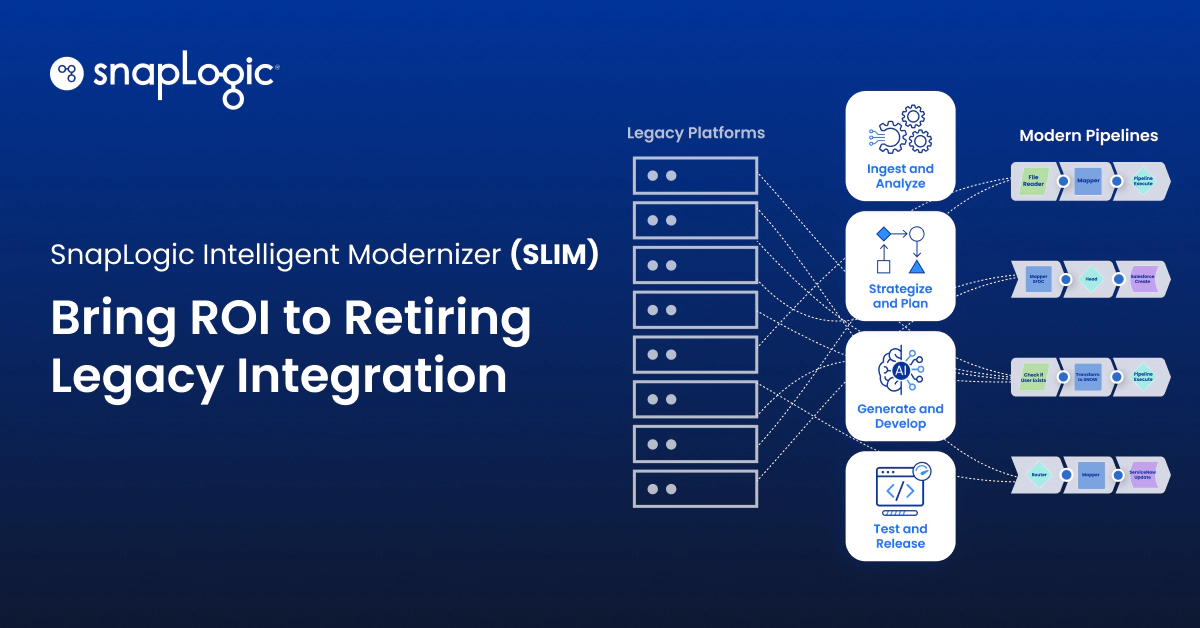
- Legacy integration migration: SnapLogic Intelligent Modernizer (SLIM) analyzes existing legacy integrations and generates SnapLogic pipelines from them, so PoC teams can bring existing logic into the evaluation without rebuilding it by hand.
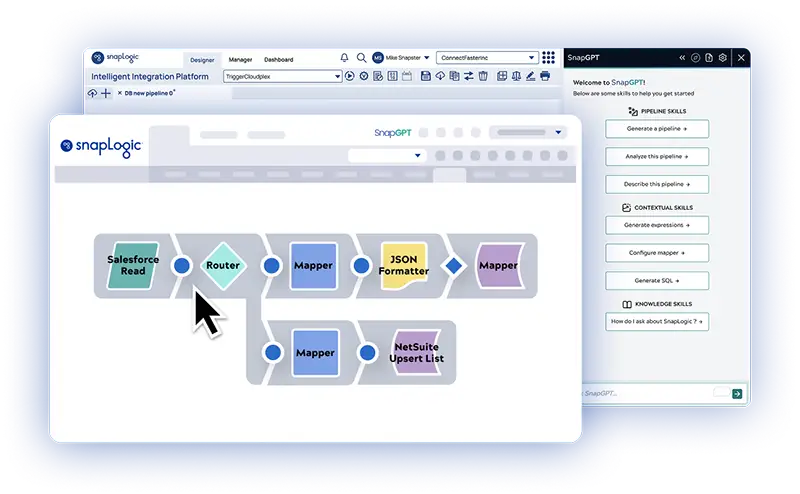
- Visual, low-code pipeline designer: Lets a single integration specialist build, test, and adjust pipelines in real time as PoC requirements evolve.
- GenAI assistance: SnapGPT generates pipelines from plain-language prompts and helps explain and refine them, so mid-evaluation requirement changes take minutes instead of days.
- Integration building inside AI coding tools: SnapCode brings SnapLogic into AI coding environments, so developers can build and iterate on integrations without switching tools.
- AI orchestration with MCP: Enterprise MCP turns PoC pipelines into governed tools that AI agents can call to reach enterprise data, while the SnapLogic MCP Server lets agents deploy, run, and validate those pipelines, so teams can prove value without custom connections.
- Conversational agents for business teams: With AgentCreator, teams can build low-code agents that query, transform, and act on integrated data, proving immediate business utility without separate reporting builds.
The same low-code pipelines built during the PoC scale directly into full production without a rebuild. By streamlining these core tasks, SnapLogic helps teams demonstrate quantifiable business value within a tight evaluation timeline, then carry that work straight into production.
PoC snapshot
A financial services lender built the same API pipeline during a proof of concept in 1 to 3 days on SnapLogic, versus 1 month on MuleSoft. Its IT Director noted that building these capabilities internally or buying separate orchestration and UI tools “would triple the cost” of SnapLogic.
Frequently Asked Questions (FAQ)
Platforms with prebuilt connectors, visual pipeline design, and AI-assisted mapping. SnapLogic provides all three in a single product.
Most run two to six weeks. The platform you choose largely determines whether that time goes to validating business value or to building connectors.
A single integration specialist can build and adjust pipelines in the visual designer, and a business analyst can contribute through AI-assisted design.
Transformation, orchestration, and business logic need connectivity to on-prem sources and data execution, which the customer network lacks, so an end-to-end use case usually involves more than one product.
A platform that combines low-code pipeline design with generative AI assistance and agent orchestration, so pipelines can be built, validated, and queried conversationally.
Take the next step
Have a PoC coming up, or an integration backlog that keeps growing? Explore the platform at your own pace or book a demo to map it to your use case.