



What is iPaaS for OEM and embedded integration?
Integration Platform as a Service (iPaaS) has traditionally been positioned as infrastructure for enterprise IT teams: a layer that connects internal systems, automates data flows, and reduces the cost of maintaining point-to-point integrations. For that use case, the buyer is a CIO or IT architect, and the platform lives behind the firewall or in a corporate cloud account.
OEM and embedded integration is a different model entirely. In this model, a software vendor ships integration capability inside its own product. Their customers experience it as a native feature, often without knowing there is a third-party platform underneath. The iPaaS vendor is a silent infrastructure layer, and the ISV is responsible for everything their customers see and touch.
This model has grown significantly as SaaS products have matured. Customers now expect the software they buy to connect with the other tools in their stack out of the box. Building and maintaining those integrations in-house is expensive, and the engineering cost compounds with every new connector request. Embedding an iPaaS platform lets product teams ship a broad integration catalog without owning the underlying infrastructure, and lets them offer their customers a self-service integration experience without building it from scratch.
For technology companies specifically, the commercial logic is straightforward. Integration is often a buying criterion, a retention driver, and an upsell surface. An embedded iPaaS lets you monetize that surface without treating it as an internal cost center.
Product leaders evaluating iPaaS for OEM, embedded, or white-label deployment are solving a different problem than enterprise IT buyers. You are not looking for a tool your team uses internally. You are looking for a platform that ships inside your product, runs invisibly under your brand, and scales with your customer base without becoming a support liability or an engineering bottleneck.
The evaluation criteria shift accordingly. Licensing model, multi-tenancy architecture, white-label depth, runtime portability, and the quality of the developer experience all matter more than the number of pre-built connectors. This post covers the major iPaaS vendors in the OEM and embedded space and what product teams should know before shortlisting them.
What makes an iPaaS viable for OEM deployment?
Before comparing vendors, it helps to be clear about what the embedded use case actually requires. Most iPaaS platforms were built for internal enterprise IT use and expanded their OEM programs later. That sequencing matters because it shapes how the architecture handles the non-negotiables in a production-embedded deployment.
A production-grade OEM integration platform needs to support:
- Full white-labeling of the UI and runtime
- Tenant-level isolation for each of your customers
- A licensing model that scales with your ARR rather than charging per-seat against your end customers
- An API surface that your developers can use to automate provisioning and lifecycle management
- Enough connector coverage to handle the integration patterns your customers actually need on day one
These requirements sound straightforward, but they expose real architectural differences between platforms. Multi-tenancy is particularly important: a platform that achieves isolation through configuration rather than architecture creates risk at scale, both for data security and for support overhead.
Licensing flexibility matters because ISV economics do not map cleanly to enterprise seat-based models. And the quality of the embedded developer experience determines whether your engineering team can ship the product on a reasonable timeline or spend months fighting the platform.
Vendors that were built for enterprise IT first and retrofitted OEM capabilities tend to have gaps in one or more of these areas. The evaluation section at the end of this post includes the questions that surface those gaps fastest.
The major iPaaS vendors for OEM and embedded
The iPaaS market includes a wide range of vendors, from enterprise integration heavyweights to platforms built specifically for the embedded and ISV use case. The options below represent the platforms most commonly shortlisted by product teams evaluating OEM deployment. Each has genuine strengths, and each has tradeoffs that matter differently depending on your customer base, deployment requirements, and product roadmap.
MuleSoft (Salesforce)
MuleSoft is a dominant name in enterprise integration and has a mature OEM program. The platform is technically capable, and the connector library is extensive. The evaluation consideration for OEM is primarily commercial.
MuleSoft’s licensing structure is designed around enterprise consumption models, and aligning that structure to an ISV ARR model requires negotiation. The platform is also heavyweight by design. For product teams that want a deeply embedded, lightweight runtime, the operational footprint can be a factor.
Boomi
Boomi has a partner and OEM program and is frequently evaluated by mid-market ISVs. The low-code interface is a genuine strength for customers who will be building their own integrations on top of your product.
The primary consideration is that Boomi’s architecture is cloud-only for the runtime, which constrains deployment options for ISVs serving customers with data residency requirements or on-premise infrastructure.
Workato
Workato has invested in an embedded product, Workato Embedded, which gives ISVs the ability to offer a co-branded automation experience inside their product. The platform is strong for business user-facing automation.
For ISVs whose OEM use case is primarily developer-to-developer or requires deep API and data pipeline capability alongside workflow automation, the evaluation is more nuanced.
Tray.io
Tray offers an embedded integration product aimed at SaaS ISVs. The platform has good API coverage and a developer-friendly approach.
It has historically been focused on the SMB-to-mid-market segment, which is worth noting if your target customer base is a large enterprise.
SnapLogic
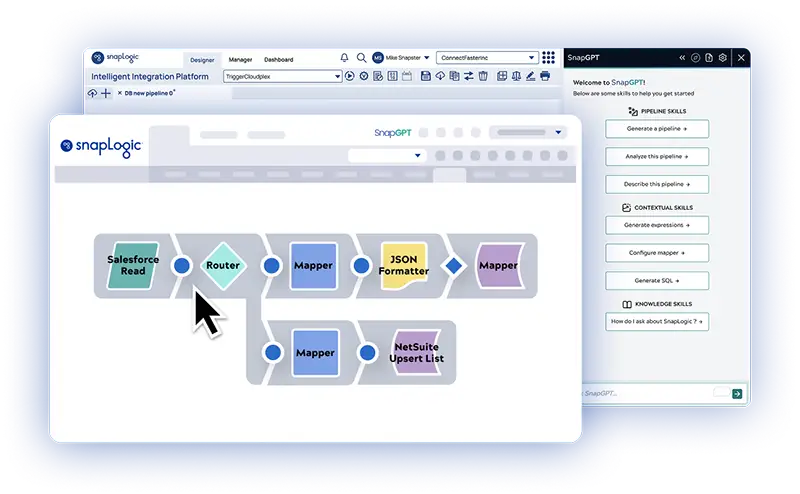
SnapLogic’s OEM and embedded offering is built on an enterprise integration platform that handles API integration, data pipelines, and AI agent orchestration in a single runtime. The multi-tenant architecture was designed for scale, and the white-label capabilities extend to both the UI and the underlying runtime.
The platform supports on-premise, cloud, and hybrid deployment through the SnapPlex agent model, which is relevant for ISVs whose customers span regulated industries.
The licensing model for OEM is consumption-based rather than per-seat, which aligns with how ISV economics actually work. The developer surface includes a full API for provisioning, pipeline management, and tenant lifecycle operations. The embedded designer is configurable to expose exactly the capability set you want your customers to access, with the ability to lock down what end users can build or modify.
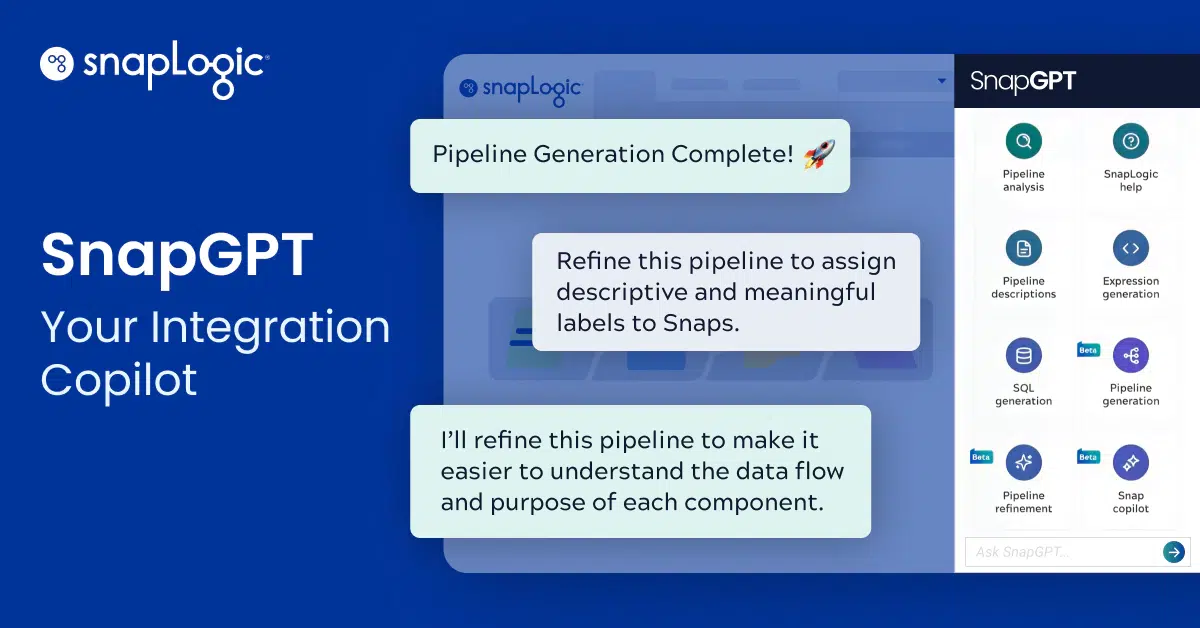
SnapLogic’s investment in AI and MCP support also positions it well for ISVs building products where integration and agent orchestration overlap. If your product roadmap includes giving your customers AI-driven automation capabilities, the platform handles both the integration layer and the AI workflow layer without requiring a second vendor.
How to structure your iPaaS for OEM evaluation
Most iPaaS vendors will tell you they support OEM deployment. The meaningful differences emerge in the details, and those details rarely surface in a standard demo or a features comparison page. The evaluation questions that matter most are the ones that force vendors to describe how their platform actually works at scale, in a multi-tenant production environment, under real ISV commercial constraints.
Before you run a proof of concept or start a procurement process, use these questions to qualify which vendors are worth deeper evaluation:
- How does multi-tenancy work at the runtime level, and how is tenant isolation enforced?
- Can you walk me through the white-labeling capability and what is and is not configurable?
- What does the licensing model look like when we have 500 customers in production?
- What is the API surface for provisioning and lifecycle management?
- What deployment models does the runtime support?
Pay attention to how vendors answer, not just what they say. A vendor with strong OEM capability will answer these questions with specifics: architecture diagrams, pricing tier examples, and API documentation.
A vendor that pivots to general platform messaging or defers to a later conversation is telling you something about where OEM sits in their product priorities. These questions will surface the gaps faster than any feature matrix, and they will save you from discovering structural limitations after you have already committed to a platform.
Final note
The right platform depends on your customers, your deployment requirements, and your product roadmap. The vendors listed here are all credible options for specific use cases. The evaluation criteria above are the ones that tend to differentiate them in practice, and they are worth applying with real customer scenarios rather than generic requirements.
Ready to see how these evaluation criteria translate into a real-world OEM strategy? See how SnapLogic handles multi-tenant isolation, white-labeling, and your specific integration use cases. Take a self-guided platform tour or book a personalized demo with our embedded integration team.