


Integration has become a strategic capability for modern enterprises. Connecting applications, unifying data, automating workflows, and delivering real-time insights are central to digital transformation.
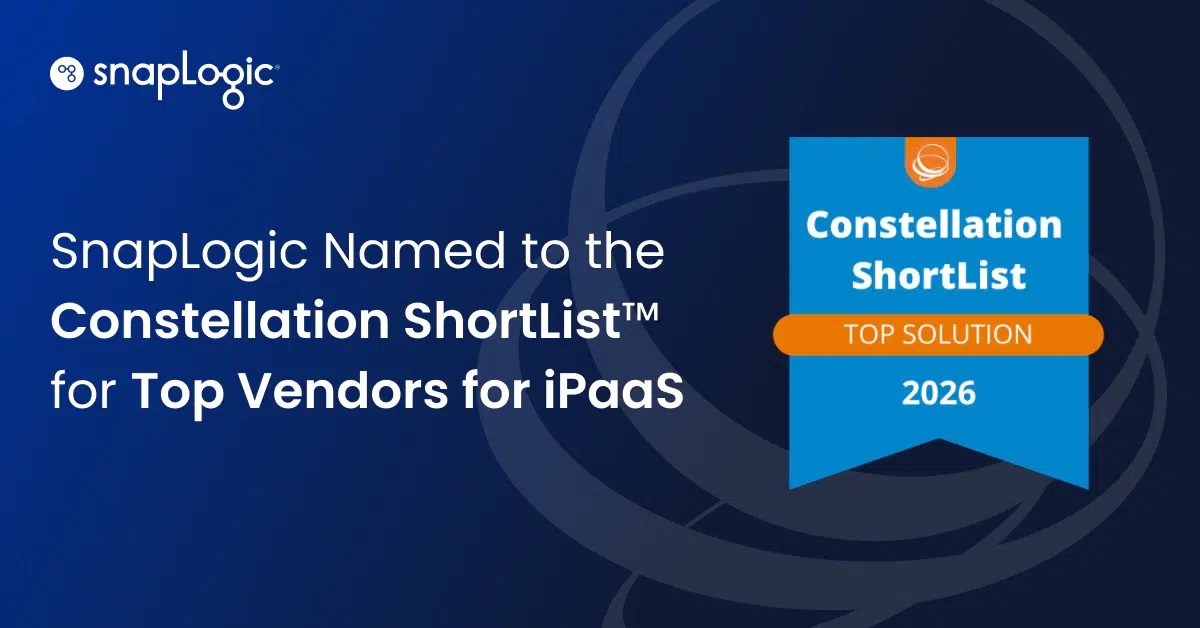
SnapLogic’s recent inclusion in the Constellation ShortList™ for Integration Platform as a Service (iPaaS) reflects the platform’s ability to deliver these capabilities reliably across hybrid and multi-cloud environments. The ShortList highlights solutions that are operationally proven, widely adopted, and relevant to enterprise needs.
This recognition signals that SnapLogic enables integration at scale while maintaining governance, traceability, and operational control.
Integration as a strategic enterprise capability
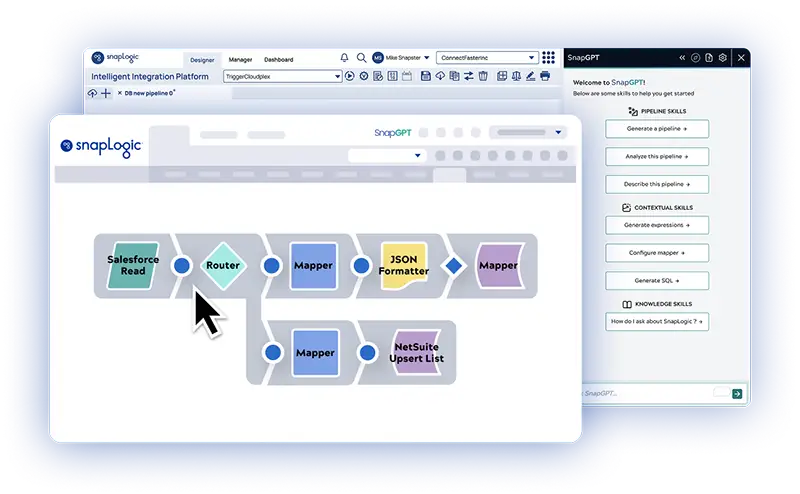
Modern enterprise integration goes beyond connecting endpoints. It requires the ability to orchestrate both data and application workflows, enforce governance, and execute operations reliably across cloud, on-premises, and hybrid systems.
For technology leaders, the value lies in the ability to deliver business outcomes while maintaining control. SnapLogic’s platform provides:
- A hybrid execution layer that operates close to systems of record
- Centralized control plane for governance, approvals, and traceability
- Governed paths that ensure actions are auditable and compliant
- Reusable capabilities that reduce manual effort and accelerate adoption
- Observability that gives leaders visibility into workflow performance and execution
These capabilities help enterprises accelerate digital initiatives while reducing operational risk and technical debt.
Impact for SnapLogic customers
Existing SnapLogic users benefit from a platform that supports enterprise-scale integration with consistency and transparency. Key advantages include:
- Integration across SaaS applications, on-prem systems, databases, and APIs
- Execution through governed paths that enforce compliance and traceability
- Deterministic workflows for complex operations, including real-time and event-driven processes
- Pre-built connectors and templates that allow teams to focus on business outcomes
These features make it easier for teams to extend automation into core systems and sensitive environments without introducing risk or operational complexity.
Guidance for technology leaders
For organizations evaluating integration platforms, this list provides context on what enterprise-grade iPaaS platforms deliver. Leaders should consider:
- Support for hybrid execution across cloud and on-premises systems
- Governance and auditability embedded into integration workflows
- Orchestration of workflows that include approvals, decision records, and traceability
- Tools that empower technical and business teams to contribute without compromising control
Selecting a platform that meets these criteria enables enterprises to scale integration consistently and safely.
Strategic value for the enterprise
The Constellation ShortList highlights platforms that provide both flexibility and operational control. SnapLogic helps organizations execute integration where the value resides while enforcing governance through a central control plane.
Execution is distributed to systems of record through hybrid runners. Governance, traceability, and auditability remain centralized. This model allows enterprises to scale automation, maintain operational discipline, and deliver measurable outcomes.
Looking ahead
Integration will continue to be a strategic foundation for enterprise transformation. SnapLogic’s inclusion on the Constellation ShortList underscores the importance of platforms that combine:
- Centralized governance through a control plane
- Distributed execution layers near core systems and data
- Governed paths that make every workflow auditable and accountable
- Observability that supports leadership decision-making
For CIOs, CTOs, and integration practitioners, success depends on the ability to scale execution safely, maintain visibility, and provide consistent results across teams and systems.
SnapLogic’s recognition reflects the platform’s ability to meet these enterprise needs today and as digital transformation initiatives evolve.