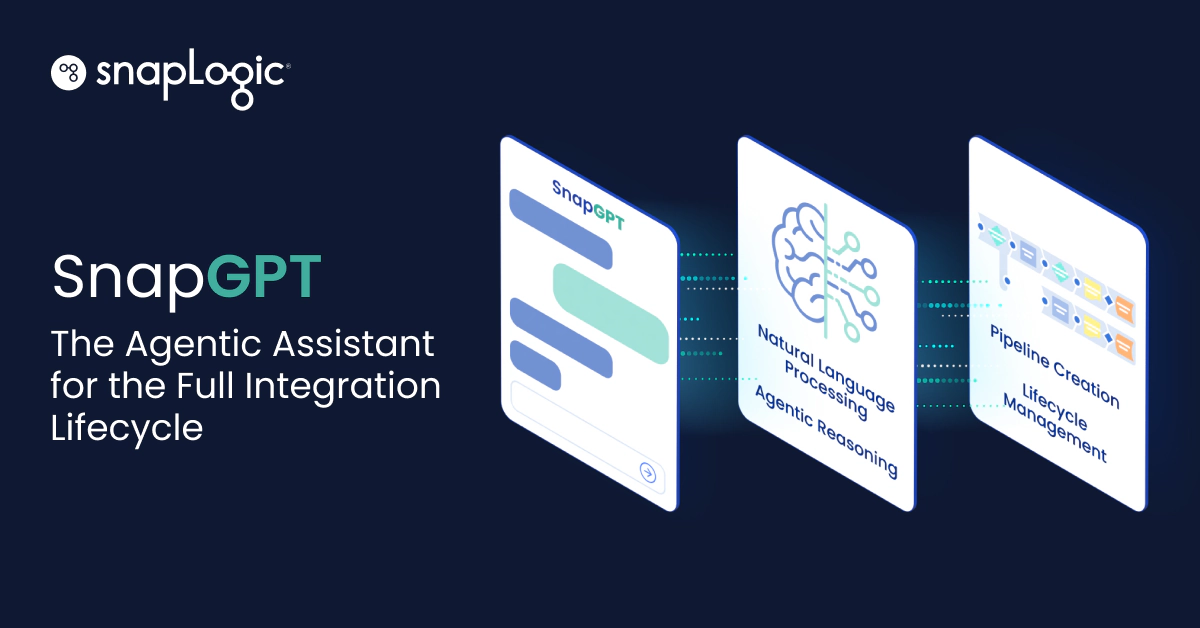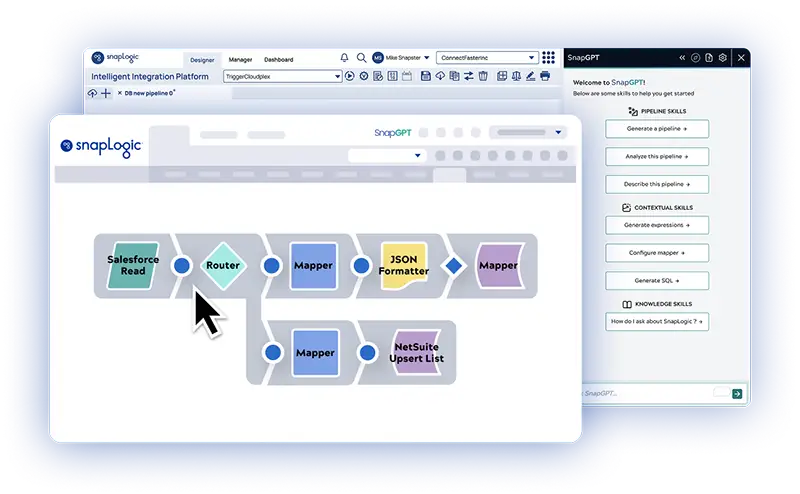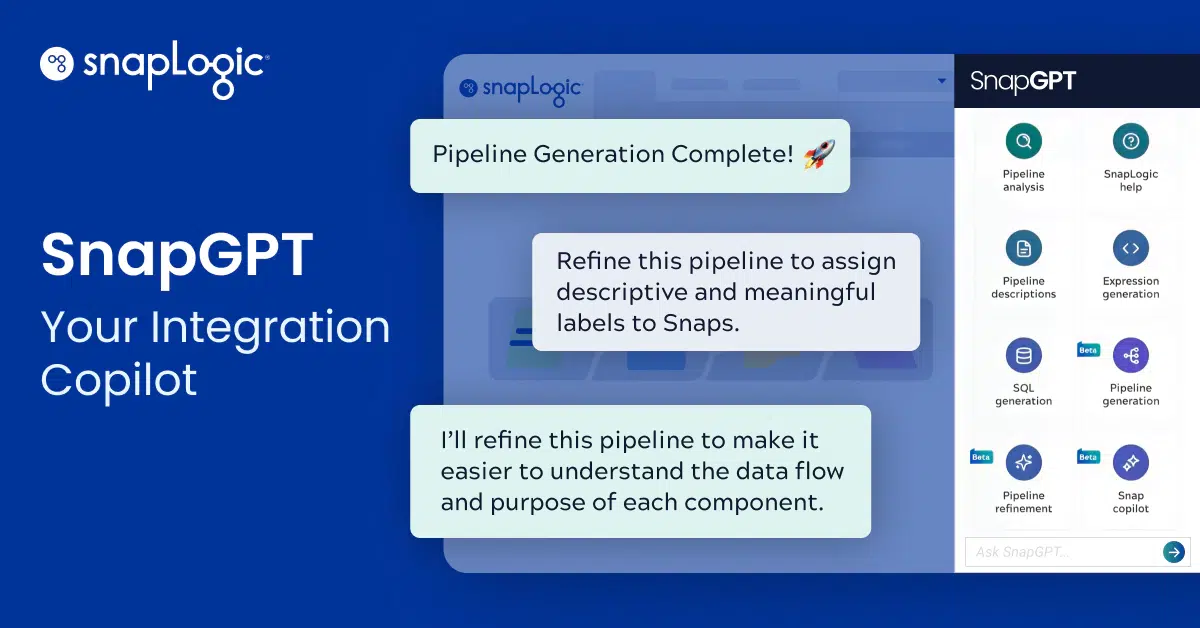



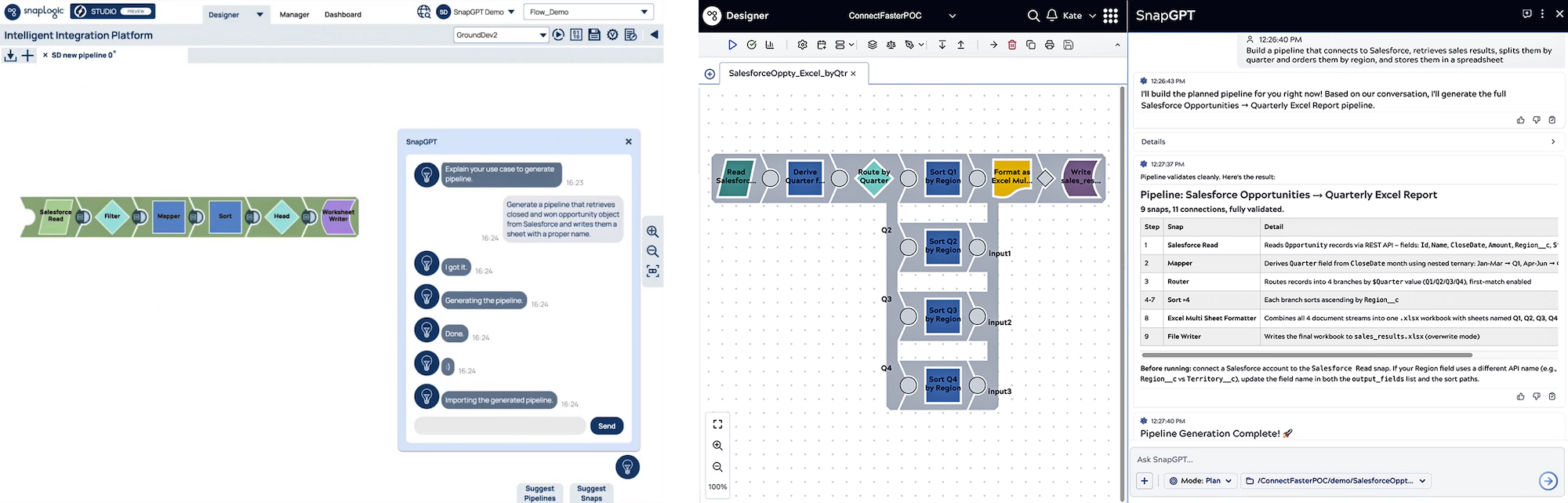
This summer, SnapLogic introduced the new SnapGPT, marking the most significant evolution of the platform since its debut in 2023. Over the last three years, SnapGPT has transformed from a straightforward prompt-to-pipeline tool into a sophisticated agentic assistant.
When SnapGPT launched, generative AI was brand new, and most organizations were only beginning to explore what the technology could do. SnapLogic entered that moment with an advantage: the company had been building AI-powered features for several years before the term “generative AI” entered common use, and already had a dedicated in-house team developing them further.
That foundation enabled meaningful advances over time, including advanced reasoning models, conversational memory, and retrieval-augmented generation (RAG) to ground recommendations in platform-specific documentation. With the addition of Plan Mode, SnapGPT can now reason through complex requirements and validate implementation approaches before development begins, shifting the focus from generation to production-ready integrations.
From day one to day two
The first iteration of SnapGPT was primarily focused on lowering the barrier to entry, helping users kick-start their integration projects with ease. However, for enterprise integration developers, the initial creation is just the beginning.
The real, ongoing challenge lies in the continuous maintenance, optimization, and iterative improvement of these integrations as business needs evolve over time. This shift from simple onboarding to sustained lifecycle management informed our transition from day one basics to day two operations.
That initial release was focused on “day one” sorts of tasks:
- How can I connect to this system?
- Build me a pipeline to read some data from that system
- What does this do?
Since then, we have worked consistently to add support for “day two” tasks, the work that power users of SnapLogic might do every day:
- Build a SQL query
- Make a regular expression
- Why is this pipeline running slow?
After all, pipelines get built once, but they need to be maintained and evolved, so once the initial creation is taken care of, the next step is to move from the “greenfield” mode of pure creation to the “brownfield” work of developing and evolving something that already exists.
We can see how these capabilities are already helping our users. In 2025, a review of SnapLogic usage revealed that the most used SnapGPT prompt was “Describe the pipeline.”
Evolving SnapGPT capabilities
The latest version of SnapGPT advances both building and maintenance tasks by shifting from a simple copilot to a comprehensive agentic assistant. To provide AI assistance across the entire integration lifecycle, we have organized these expanded capabilities into four core pillars: Plan, Build, Understand, and Operate. Here’s how each of these pillars supports different phases of your integration work.
Plan
The new Plan Mode helps users validate requirements, explore implementation approaches, refine workflows, and identify any potential issues or edge cases before development even begins. SnapGPT will ask clarifying questions and suggest possible solutions.
Build
Generate high-quality, production-ready integrations through integration-specific reasoning and pipeline execution validation. The quicker the pipeline can be developed and deployed in production, the sooner it will start generating value. This is also why we have pushed SnapGPT to be able to handle multi-pipeline generation, intelligent pipeline refactoring, reusable expression libraries, and the natural-language generation of SnapLogic MCP Servers.
Understand
Analyze existing integration assets, explain pipeline logic, and surface contextual insights to help teams better understand and improve complex integrations. Some SnapLogic users have over a decade of history with the platform, and that is a treasure-trove of insight into best practices, naming conventions, and standards of those organisations.
SnapGPT can leverage that information to provide outputs that are specific to those needs, not just in generic ways (i.e., does the pipeline pass validation?) but in highly particular ones (i.e., is the pipeline built the way we do things around here?).
Operate
The SnapGPT Activity Log provides administrators with visibility into AI-assisted development activity. Meanwhile, SnapGPT Monitor Insights extends AI assistance into production operations with diagnostic intelligence and AI-powered troubleshooting. This new capability takes SnapGPT for the first time beyond the development-oriented use cases and into production operations.
In this initial release, SnapGPT can help platform administrators understand the health of their SnapLogic infrastructure and debug any pipeline execution failures that might occur, complete with root-cause analysis and suggested remediation actions ready to be put into action.
Driving enterprise value
These features build on the capabilities that have already made our users successful. Even before the new release went live, we’ve seen a steady rise in prompts week over week so far this year. Since our latest release, prompt volume has increased by 50%.
At a time when many vendors and IT professionals are struggling to connect AI capabilities to real, tangible enterprise value, it is heartening to see these sorts of long-running adoption patterns, and we look forward to seeing how entirely new types of users will take advantage of SnapGPT. Platform operators have very different needs from pipeline developers, after all, but in some ways are under even more pressure.
While it is an honour to say that many of our customers run business-critical use cases on the SnapLogic platform, we also feel that responsibility keenly. If a pipeline fails that underpins a critical business process, the consequences can accumulate rapidly. Every minute shaved off the resolution time counts in those scenarios.
The future of Agentic Integration
This trend will only accelerate with the ongoing adoption of MCP. SnapLogic can help make companies’ agentic AI ambitions real by offering managed, governed, enterprise-grade, and compliant connectivity to the systems and data that run the enterprise.
But for companies to entrust their future projects to SnapLogic, they need visibility to detect issues, contextual insight to diagnose them quickly, and automated capabilities to resolve them rapidly.
The August release extends that foundation further, with MCP observability and MCP token exchange adding more visibility and security for agentic integration in production.