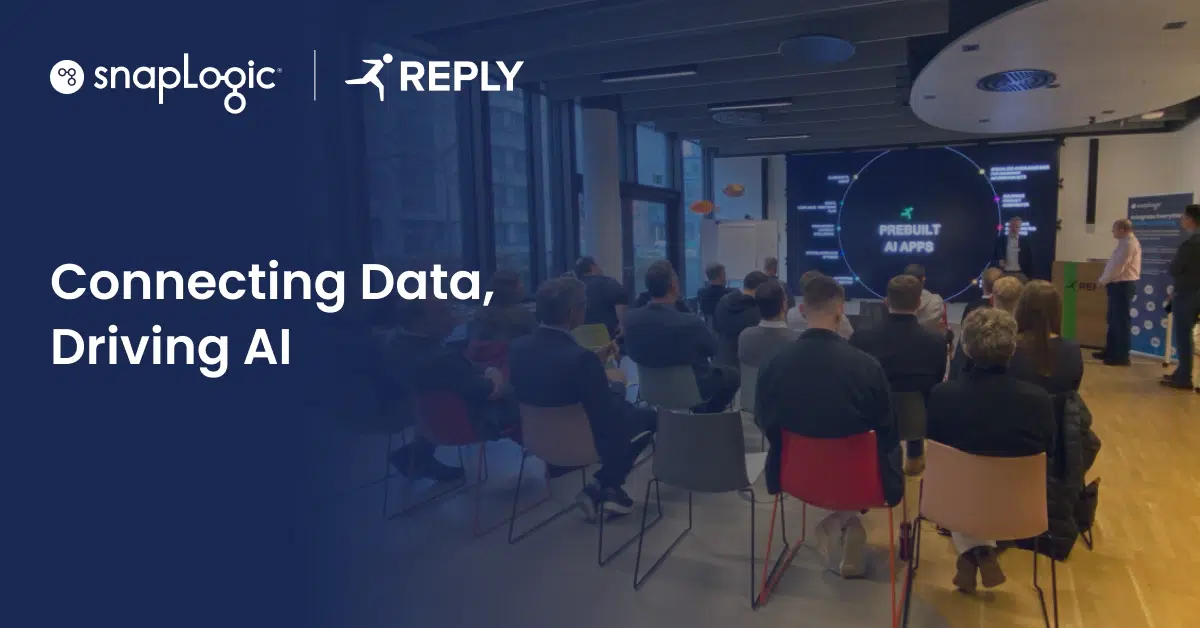



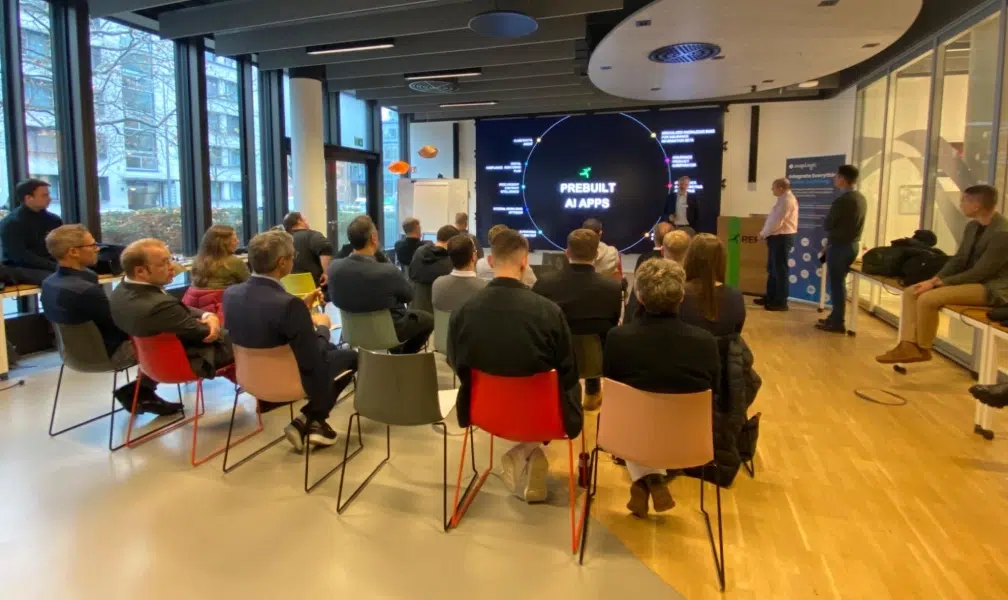
Two things that are good in every season: the city of Munich, and spending quality time with customers and partners. But Munich in December is particularly festive, and when it’s cold outside, that’s just one more excuse to get together and share stories. So that’s exactly what we did, gathering at the Munich offices of our partners, Reply, together with a varied group of current SnapLogic customers and people interested in understanding more about what we do.
The key to these events is balance: power users want to dive deep into the details of how to do particular things or what our future plans for the platform look like. Meanwhile, new or prospective users want a bit more context about what the technology enables. This balance was reflected in the day’s agenda, moving from a deep dive into our AI and platform roadmap in the morning to the afternoon’s focus on the composable enterprise and real-world use cases.
AI and core platform evolution
We spent the morning sharing our roadmap and gathering the (sometimes very detailed!) feedback from current customers. Without giving away too much here, the broad strokes would probably not surprise anyone: forging ahead with AI features on the one hand, including productising innovations such as MCP, and on the other hand continuing to evolve the core platform that connects those AI features with the core data and systems that run the business today.
A platform like SnapLogic, which by definition has to integrate with many other systems, cannot stand still: it must always evolve, supporting new systems that our customers adopt, as well as new features of existing systems that their developers release.
In addition, we are constantly working on our own platform internals to make sure that we can support all of our customers’ most mission-critical workloads.
Composability and the AI imperative
After a light lunch, we started the more open afternoon sessions. The theme of the day was about the composable enterprise, and how the SnapLogic vision aligns with that of our partners at Reply. As with all the best presentations, the joint message from Reply and Snaplogic fell into place very naturally. Composability has always been important, but the rise of AI makes it a must-have.
As our Reply friends shared, the key challenges of any AI project are:
- Ensuring business alignment
- Breaking down existing data silos
- Establishing a clear governance strategy
Of course this is what SnapLogic is all about, unifying information, enabling business units to access trusted data, and accelerating AI-driven innovation.
This alignment set the theme for the rest of the presentations, showing off various production use cases.
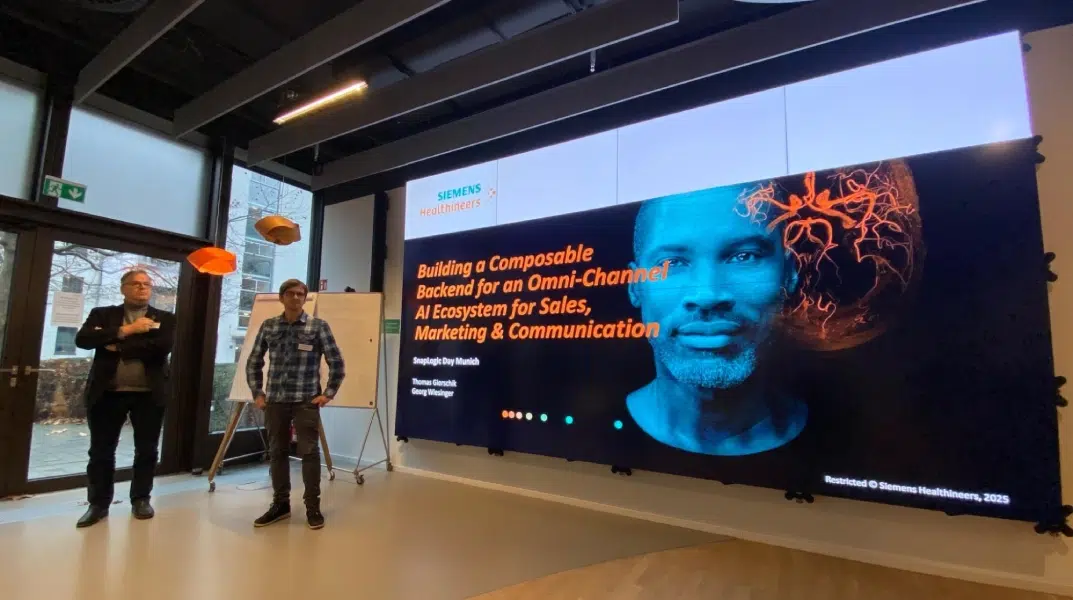
Agentic AI at Siemens Healthineers
The problem is a common one: tools and data sources have proliferated to the point that users no longer know where to turn to find information they need or accomplish a task. What users actually want is an expert to help them navigate this complexity — so that is what the team built, using SnapLogic to integrate and orchestrate a huge variety of internal tools.
The key to success here is that the AI component is incremental: all of the foundational systems are already in place, and they can still be used as normal. The AI is adding value over the top, unlocking additional returns on investments that had already been made, and making users that much more effective.
Apart from the technology, the key to success here is working directly with end-users to understand their needs and concerns. This is even easier if the business stakeholders can get involved directly, which is what SnapLogic’s graphical low-/no-code interface enables.
This citizen integrator model has been very popular, enabling a real community to arise, with a “hub and spoke” model. In other words, each department can build what they need, with support from a center of excellence when they need advice or assistance.
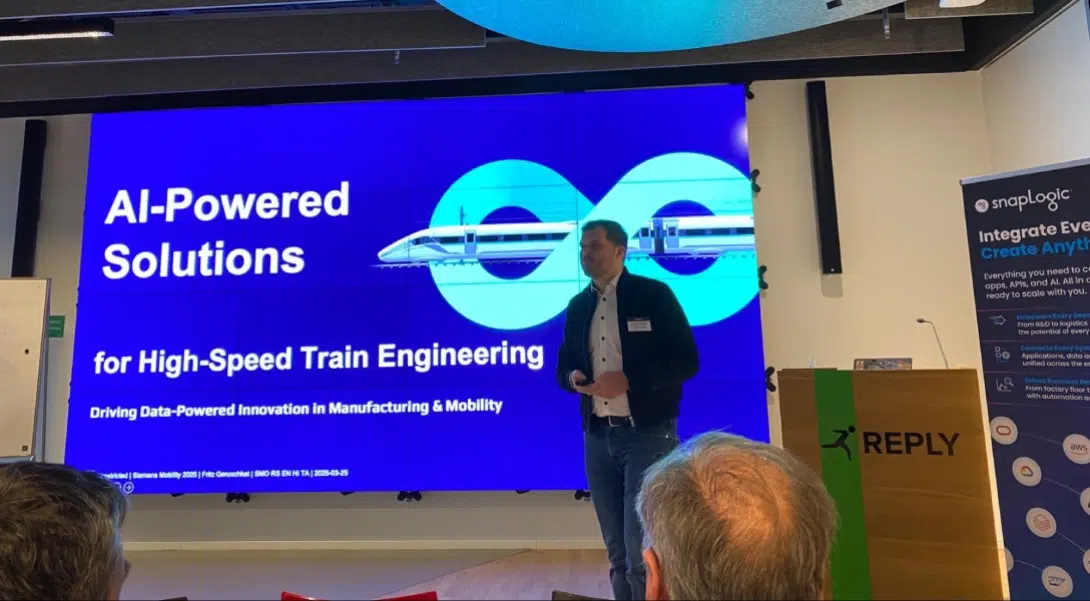
High-speed fire safety at Siemens Mobility
A more narrowly scoped example came from Siemens Mobility, where the struggle to manage fire safety certifications across the roughly five thousand components that make up a high-speed trainset is exacerbated by the 1380 (and counting!) possible combinations of file format, originating lab, and test method.
Managing all of this complexity by hand was obviously time-consuming and not exactly riveting, which in turn meant that there was a significant risk of errors creeping in.
Luckily, this is the sort of thing that AI is good for, and by orchestrating existing systems together with some customised AI via SnapLogic, some very significant results have already been achieved. The best part is that this is only the beginning, and many more use cases have already been identified where these new capabilities can be leveraged.
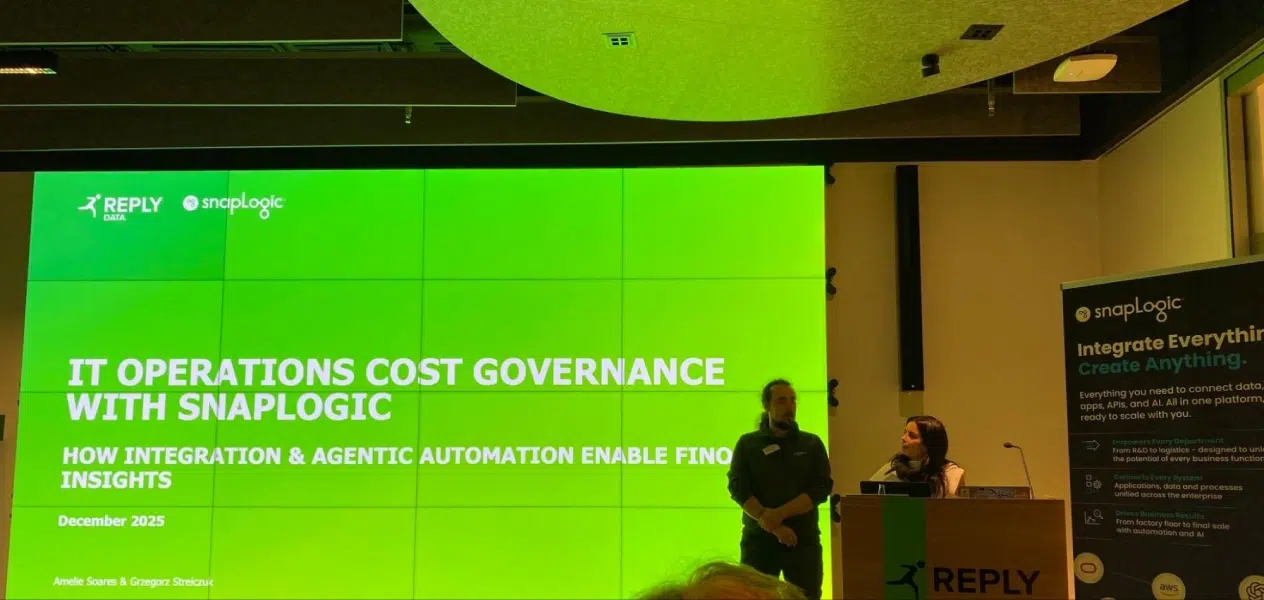
IT operations cost governance
The final presentation of the day came from our hosts, Reply, sharing a FinOps use case they had recently implemented. Adding a financial dimension to IT Operations has a twin challenge of accessing data and analysing it effectively.
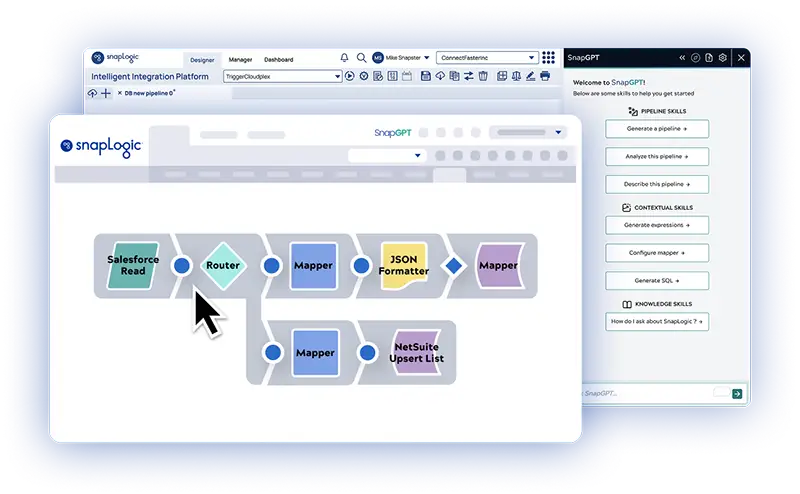
By working with SnapLogic, the Reply team was able to ingest both structured and unstructured data, enrich it to combine technical data with business-case information, and do that quickly thanks to the assistance of SnapGPT.
Once again, the basic capability is only the starting point. Very rapidly, they were able to implement additional capabilities such as alerting for budget outliers and enabling time-series-based forecasting into the future.
SnapLogic, as the connective tissue between all the various data sources and the specialised forecasting models and dashboards, made the whole process seamless, enabling scalable and data-driven cost governance.

Thanks, and see you next time!
After all that, it was high time for some Glühwein (mulled wine), and continued conversations about what we had seen throughout the day. Even some seasoned SnapLogic users found out new ways that the platform could be used, but some of the biggest revelations were for the prospective users.
After all, it’s one thing to hear a pitch from a company; it’s quite another to hear current SnapLogic users enthusiastically illustrate all of the value they have unlocked in their own realities. From the vendor side, those are the best conversations, when you can just introduce two people and stand back, letting them build on each other’s excitement.
We are always putting on events somewhere; if you can’t get to one in person in 2026, join us for one of our virtual events. We don’t serve Glühwein at those, but apart from that, we make them as close as we can! I hope to see you at one soon.
Want to join a future event? Check out SnapLogic’s upcoming event calendar.