


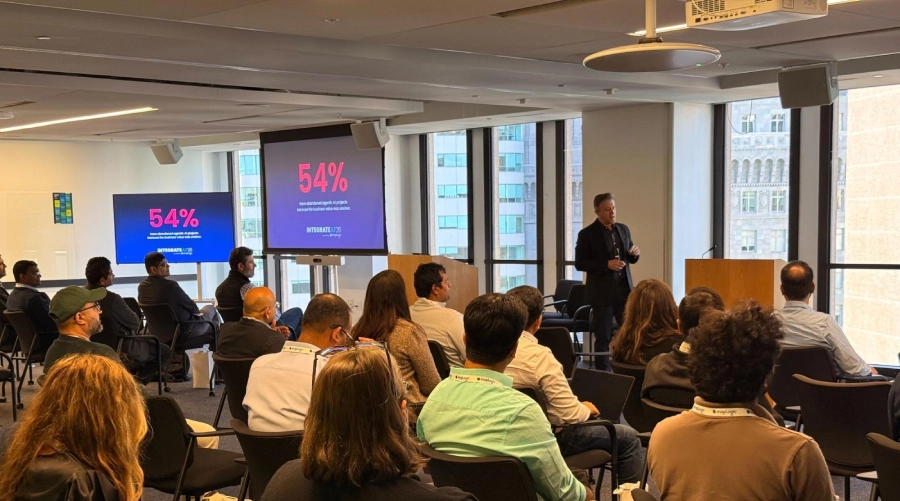
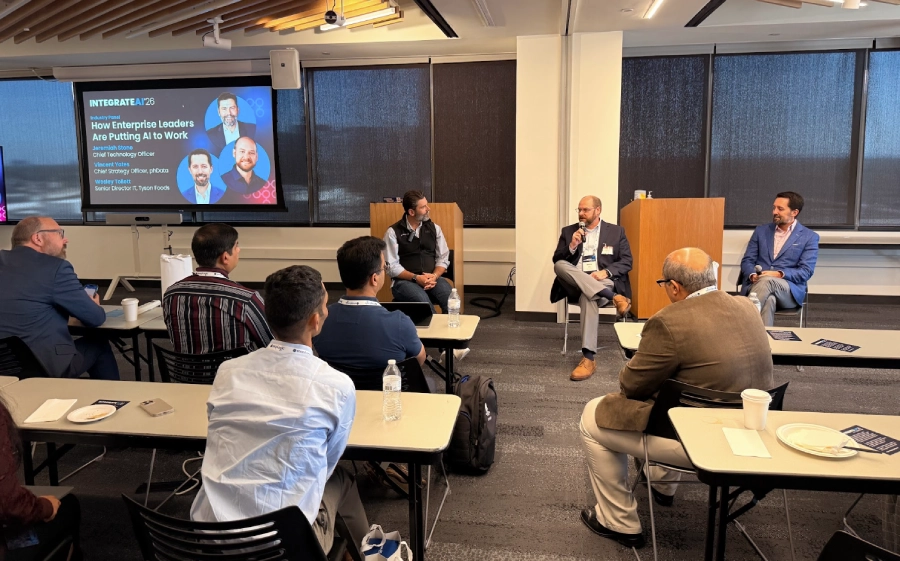
Two stops into the IntegrateAI 2026 tour, we have spent a lot of time listening. In Dallas on October 6, most people in the room had already run AI pilots, and the conversation centered on what comes next. In San Francisco on October 28, the roundtable took on the questions of where to start with AI, how to achieve trust and governance at scale, and how to build momentum beyond initial pilots.
Some of the most useful conversations on this tour have centered on questions with no standard answer yet, where the people asking the questions are the ones doing the work. With London on November 17, we want to put a few of those questions on the table and invite you to bring your own answers.
What should an AI agent be allowed to do?
This is the first question, and a wrong answer here can stop a promising AI project dead in its tracks. An agent that needs to connect to a core system of record like Salesforce or SAP forces a decision about permissions on day one.
Reading a customer record carries little risk. Updating a contact’s record, moving an opportunity stage in Salesforce, or changing an order in SAP are actions that have consequences, and a wrong write can reach a customer before anyone notices. This is why a staged approach is best, based on levels of access that map to business impact and risk appetite as much as to technological capabilities.
An example of a practical permission ladder has four rungs: read-only, draft for human approval, write to a narrow set of fields, and act alone inside a defined workflow. Each rung requires more governance and oversight than the one before it.
An agent that summarizes account history would be able to stay on the first rung. An agent that logs call notes to Salesforce would need the third rung, which comes with automated oversight, such as an audit trail on every write.
We would like to hear how you structure these decisions: what are the rungs on your ladder, where your agents sit on that ladder, who signs off on each step, and what evidence it took to get that sign-off.
How small can a first AI agent result be?
It’s fine to start small; in fact, that’s how every success begins. A first agent might automate a single task that someone on your sales team already knows well: following up on every inbound lead, scoring calls against a playbook, or checking open deals for missing next steps. These sorts of well-defined and contained tasks produce a number from week one, such as leads contacted, calls scored, or deals flagged, making it easy to show value from AI initiatives early on.
What is the smallest result that would convince your leadership to keep going? And which task do your people know they should do and never get to?
Where does the saved time go with AI efficiency?
When an agent takes over routine follow-up and review work, the people who used to do it have time for something else. Some teams will point that time at more customers. Others will use it for deeper preparation, or for the projects that kept slipping down the list.
Teams that decide in advance get more from the hours they free up. We would like to hear how you are making those decisions, and who is involved in them. This is not a technical discussion, but it is key to realising — and demonstrating — the value of AI.
How will you know AI is working?
Turning AI investment into business results takes evidence, and many teams are still working out which evidence to collect. The useful version of this question is specific. For example: What would you count after 30 days? What result would make you expand a project, and what result would make you stop?
The companies that agree on those answers before the agent goes live tend to have shorter review meetings.
The common thread behind enterprise AI decisions
At their core, decisions around permissions, goals, time, and metrics follow the same path: what might look like a purely technical choice ultimately shapes how a team operates day to day. That is why these conversations are so much more valuable when shared with peers. Every organization will weigh risk differently and land on its own approach depending on its industry and culture.
London brings together customers and leaders from organizations including Cambridge & Counties Bank, Siemens Healthineers, Elida Beauty, Arriva, MIND and Emirates, giving you a chance to compare notes with people who are working through these same decisions — or who are maybe a couple of steps further down the road, and can share what they have learned along the way.
Bring your insights
Bring your answers to these questions, or your own questions that you need answers to! Your insight and input are welcome, and we invite you to join our discussions. The tour reaches London on November 17. Register now to save your seat.