

Data Integration and Management
Easily mobilize and transform data across cloud and on-premises environments. Manage, operate, and govern your network of pipelines, all in one platform.
Data integration and automation done differently
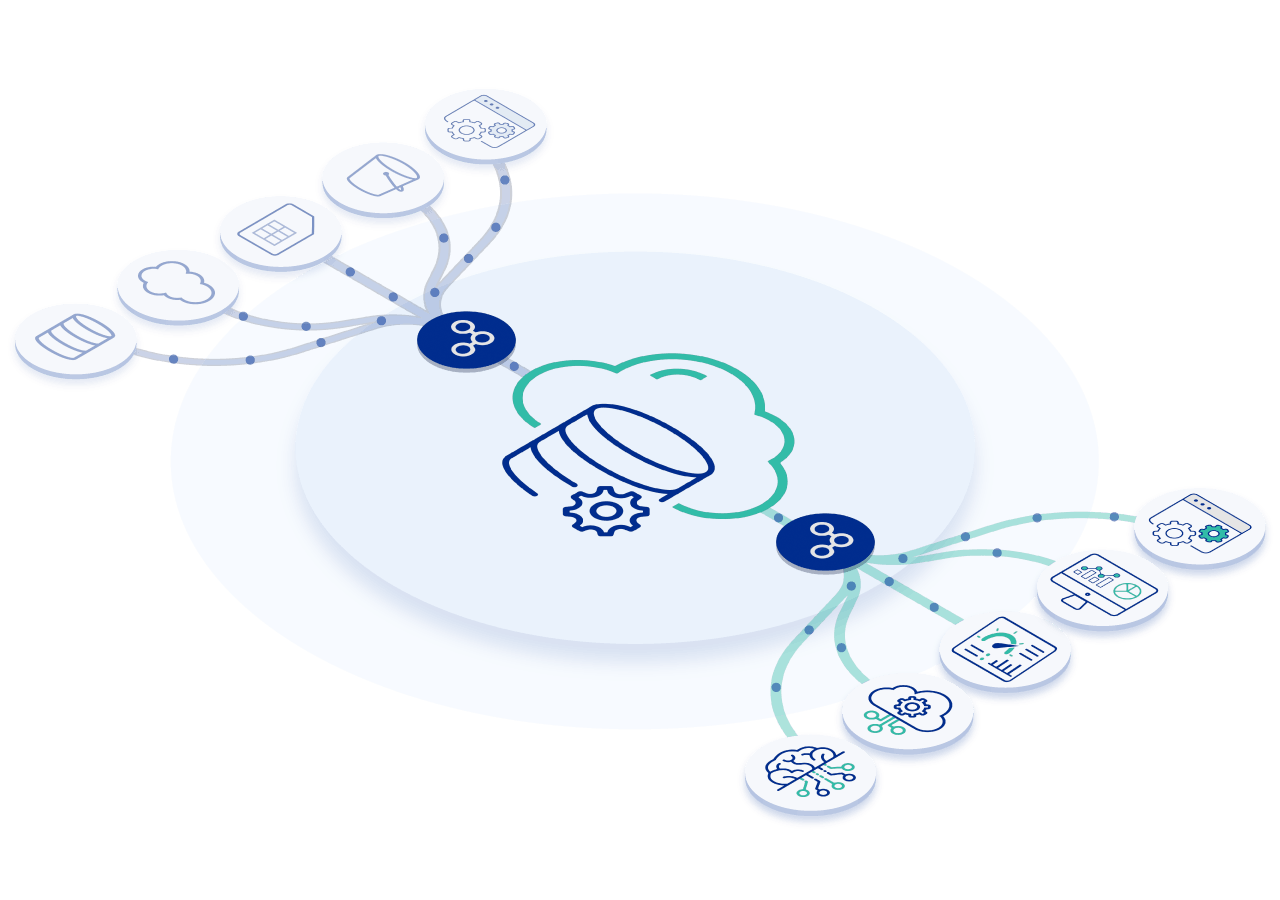
SnapLogic delivers a versatile and scalable data integration solution that enables you to connect and load data from on-premises or cloud-based sources. Use either ETL or ELT data load patterns, and after you’ve enriched your data in a cloud data warehouse, connect to your operational applications with reverse ETL. Accomplish all this with one easy to use platform. Eliminate data silos and stop costly and complex integration tool sprawl.
Accelerate data analytics projects for everyone
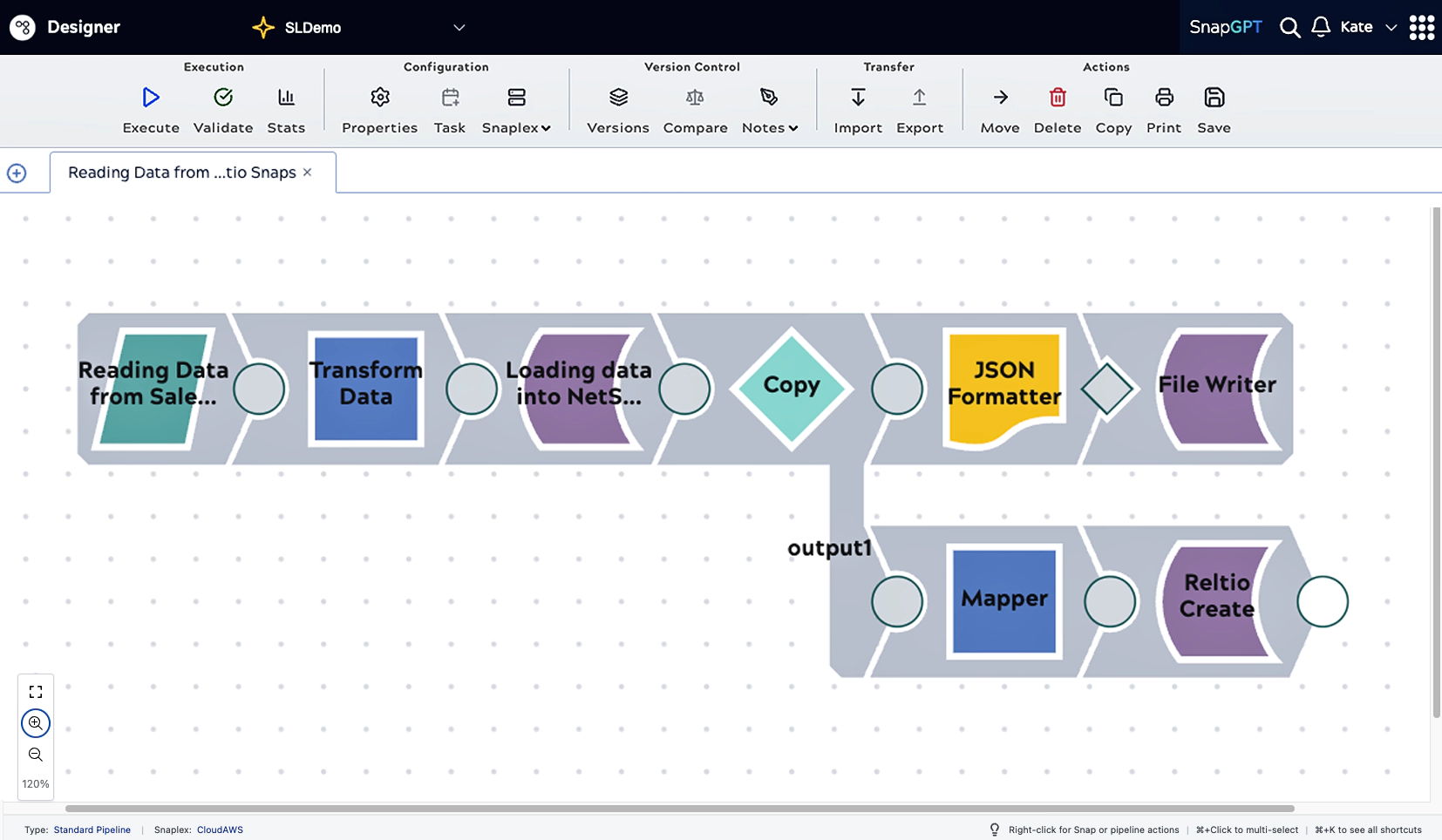
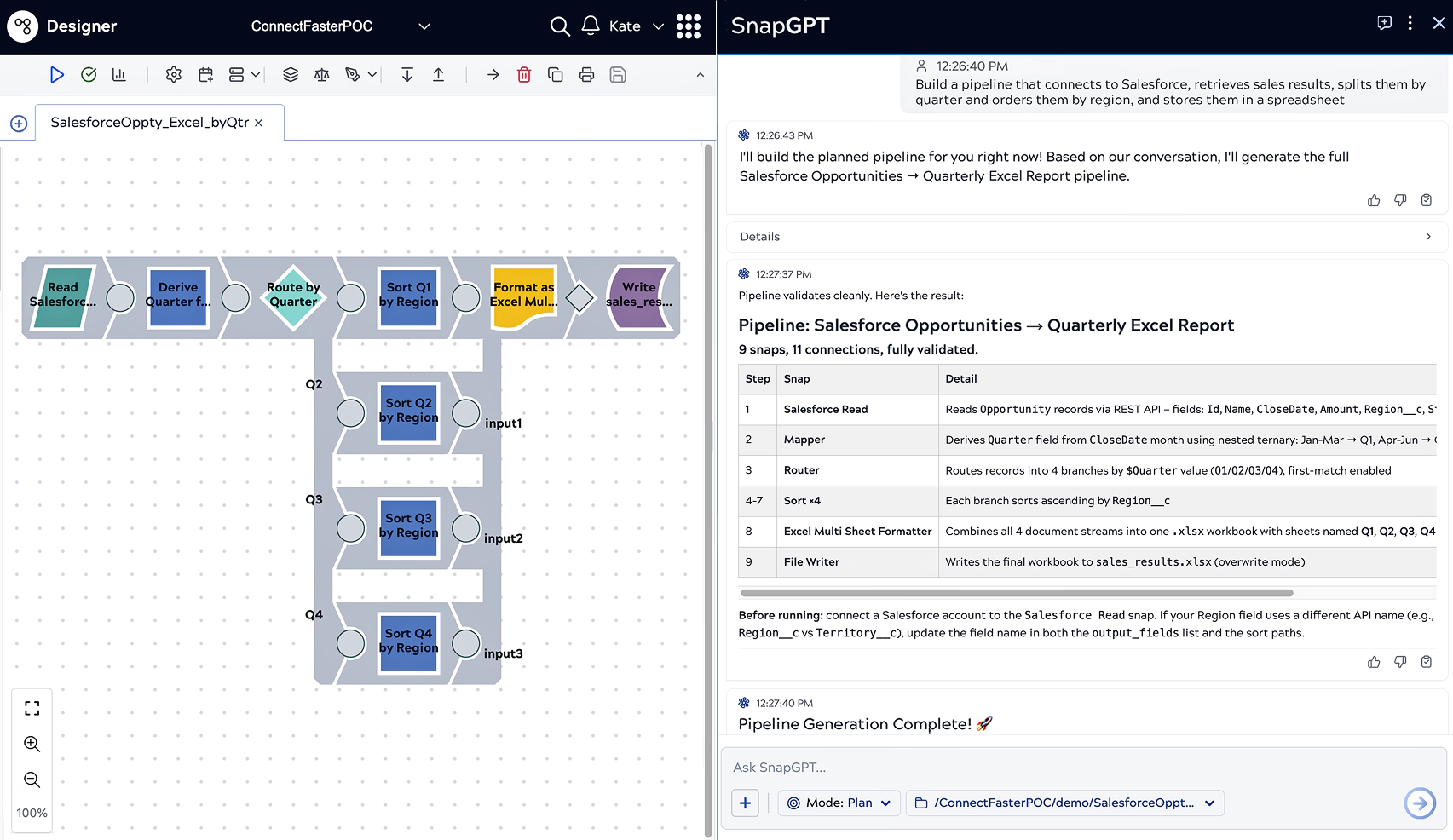
SnapLogic delivers an agile, cloud-native iPaaS for data platforms. Our built-in AI assistant, SnapGPT, significantly speeds up the creation of pipelines compared to manual coding. And SnapCode brings the power of SnapLogic right inside your favorite AI coding assistant. It’s time to scale your integrations further and operate more efficiently.
Observe and operate SnapLogic pipelines more efficiently
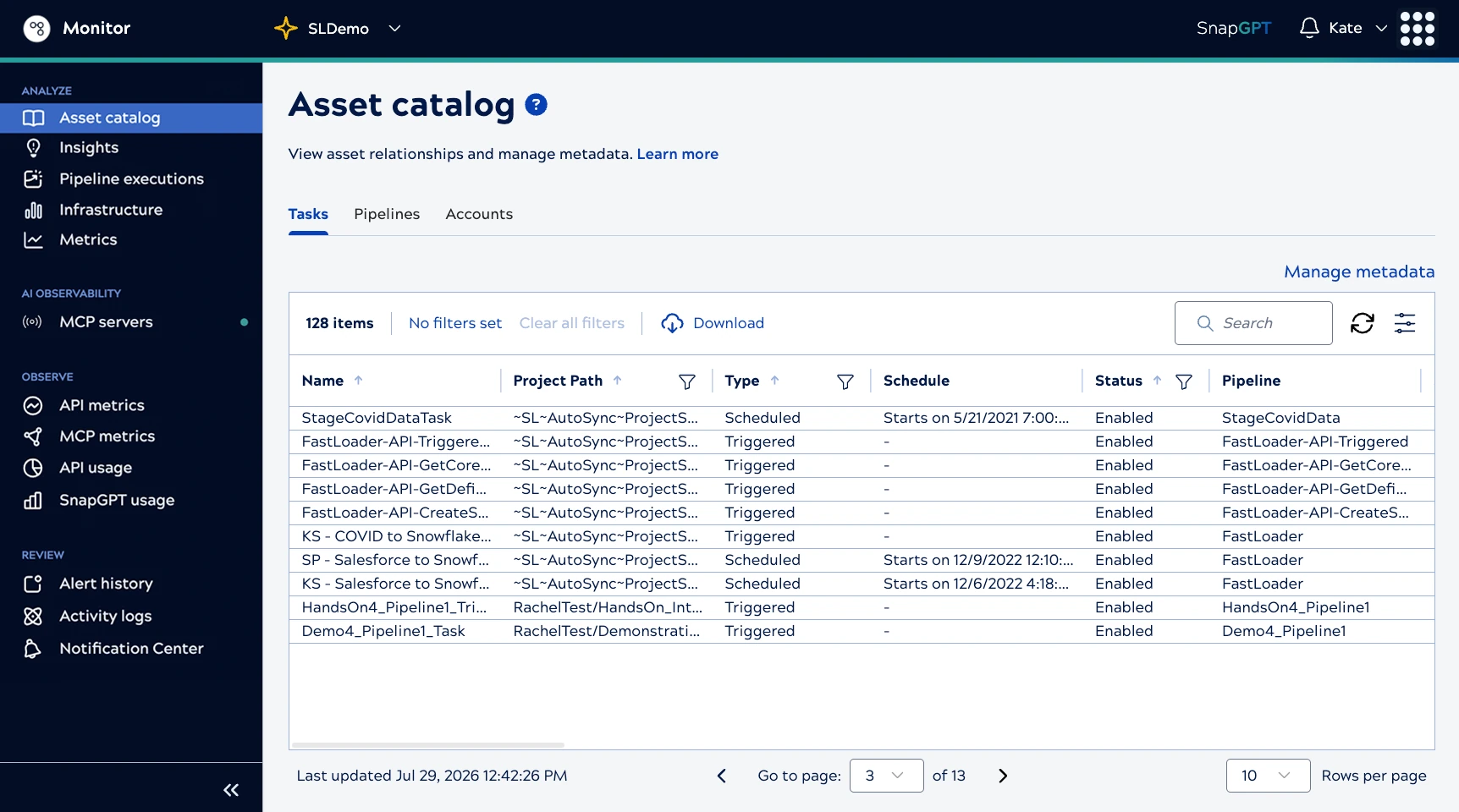
The SnapLogic Asset Catalog makes finding, understanding, and classifying SnapLogic pipelines easier for IT, specialist teams, and business domains. Quickly uncover pipeline touch points across data warehouses, data lakes, applications, APIs, LLMs, vector databases, MCP servers tools, and more. AI assistance from SnapGPT can speed root-cause analysis, reveal or add business context to pipelines, manage sprawl and duplication, and monitor usage and capacity.
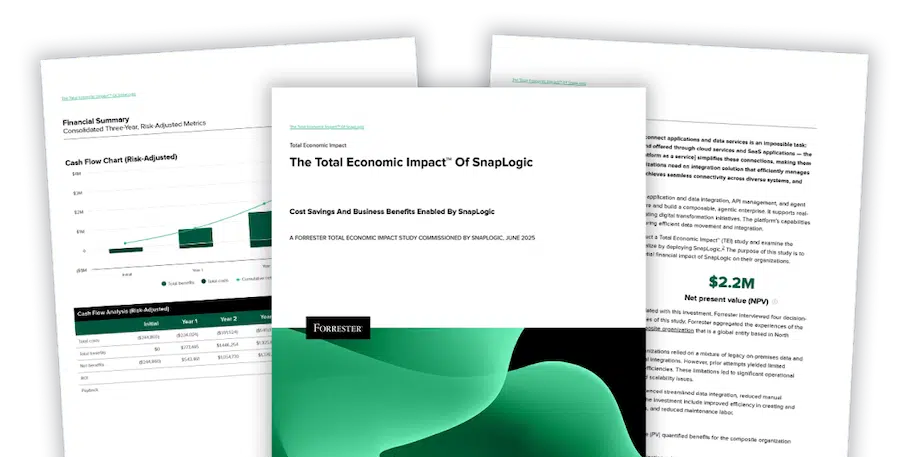
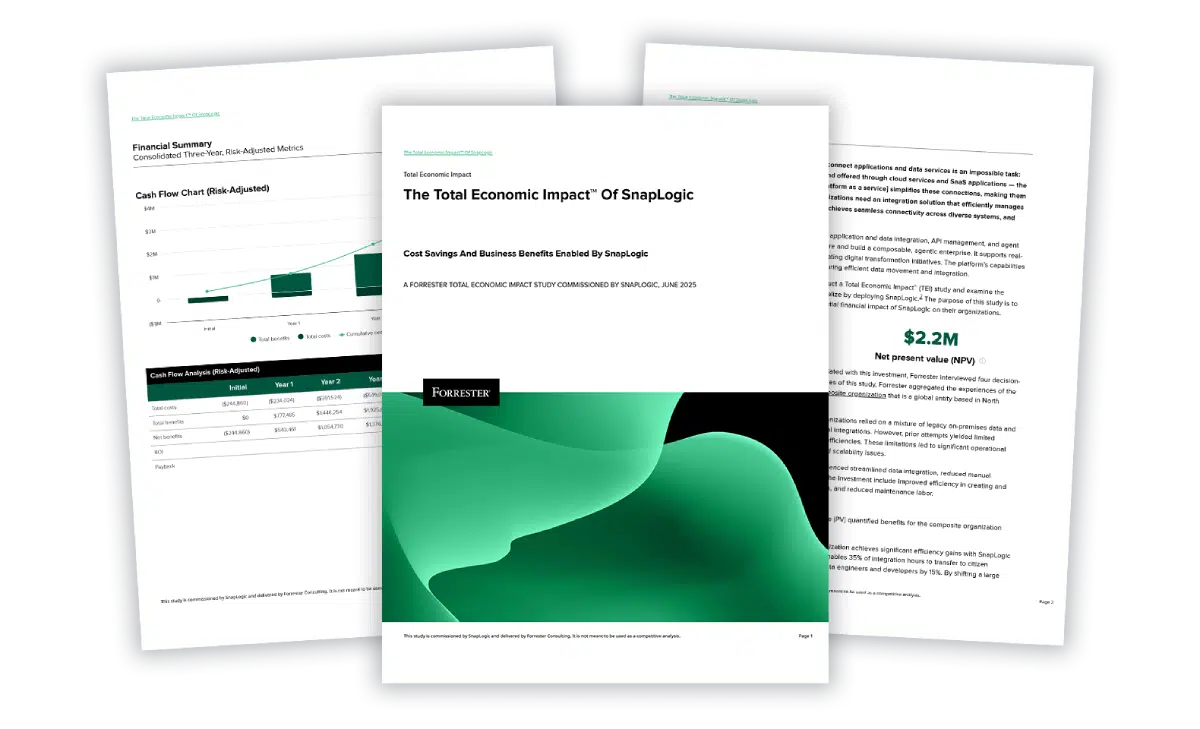
Accelerate data integration with AI

“The best features SnapLogic offers include its ability to connect to almost anything. It has Snaps for any function that you want to do with the data on the way in, which means we do not have to limit what our users want, and we are able to work really quickly.”
Mats Whittaker
Enterprise Architecture Lead at Mind

“SnapLogic makes it easy for business and IT teams to quickly and intuitively move petabytes of data from multiple sources into Amazon Redshift, granting access to data insights.
Mats Whittaker
Rahul Pathak, Vice President of Data & AI GTM at Amazon Web Services (AWS)
SnapLogic won the 2025 InfoWorld Technology of the Year award in Data Management for Integration.
From the judges:
“By embedding AI-powered agent creation directly into its integration fabric, SnapLogic transforms how enterprises operationalize genAI. With tools like Prompt Composer and Agent Visualizer, it delivers secure, enterprise-grade innovation well beyond traditional data movement platforms.”
Featured Resources

FAQs
Data integration is the process of bringing together various sources of data to make that data more useful.
For example, by integrating data from your CRM, contact center, website, mobile app, marketing, and sales
software, you can create a 360-degree view of your customer data. Having a 360-degree view is more useful to the business (and ultimately to the customer experience) than just knowing separate data points that don’t seem to connect in each of the systems.
Data integration is key to the success of AI initiatives at production scale. Without ongoing access to updated data, AI systems cannot give useful results. Most use cases for AI span many different systems, requiring an agentic data fabric that can span across all of the various data sources that the AI needs to access. Meanwhile, AI assistance makes it easier than ever before to build precisely those integrations and deploy them quickly into production.
The cornerstone of data integration lies in the processes of ETL (Extract, Transform, Load) and ELT (Extract, Load, Transform). ETL is about extracting data from varied source systems, transforming it to a standardized format, and then loading it into a target system, say, a data warehouse. On the flip side, ELT is a more modern approach where data is extracted, loaded into the target system, and then transformed for analysis.
A cloud data warehouse is an online repository for all the data that an organization consolidates from various sources – data that can then be accessed and analyzed to run the business. This data could be from multiple data streams, the Internet of Things, relational databases, and data systems.