



Throughout this series, we have explored how AI introduces a new execution layer inside the enterprise, where models provide reasoning and agents initiate action.
Execution can outpace the systems originally designed to govern it, which is why architecture, the control plane, trust, and governance are all critical. Architecture establishes the foundation, the control plane coordinates activity, trust becomes visible through traceability, and governance moves into the execution layer itself.
The remaining challenge is making this operational across the enterprise, ensuring that AI delivers real value without introducing risk or operational friction.
Execution challenges behind enterprise walls
Enterprises are rarely clean cloud environments. They are shaped by years of accumulated systems, operational requirements, and regulatory boundaries. ERP platforms operate on defined change cycles, private clusters host critical workloads, and sensitive data is protected by policy and network constraints. This is where enterprise value lives, but it is also where execution becomes difficult.
Most meaningful outcomes sit behind boundaries, including:
- ERPs and mainframes
- Private clusters
- Regulated datasets
- Internal applications
- On-prem networks
- VPCs with restricted access
Early agent deployments often succeed where access is straightforward, such as updating tickets, generating summaries, or making lightweight SaaS changes. These initial wins demonstrate progress quickly, but over time, the business asks for execution that affects systems of record:
- Updating ERP data
- Remediating production incidents
- Provisioning access with controls
- Reconciling internal data
- Safely moving regulated information
At this stage, programs slow down. This is not because agents lack intelligence, but because the execution layer cannot reach the enterprise through governed paths. Sustainable rollout requires extending execution into the enterprise while maintaining control.
Execution is distributed across the enterprise
Most organizations do not operate on a single automation surface. Execution already exists across integration platforms, internal workflows, APIs, and operational tooling, with ownership and governance varying by team and environment.
New capabilities can be introduced quickly: MCP servers expose tools, agents begin invoking actions, and execution expands faster than coordination can keep pace.
In hybrid environments, connectivity becomes as much a policy question as a technical one:
- Can we reach the system? (network boundary)
- Should we reach the system? (security boundary)
- Can we move the data? (governance boundary)
- Can we take action? (risk boundary)
Solving only connectivity introduces risk. Applying governance separately slows adoption. Enterprise rollout requires both to operate together through the control plane, connecting governance and execution across the hybrid environment.
Centralized governance with distributed execution
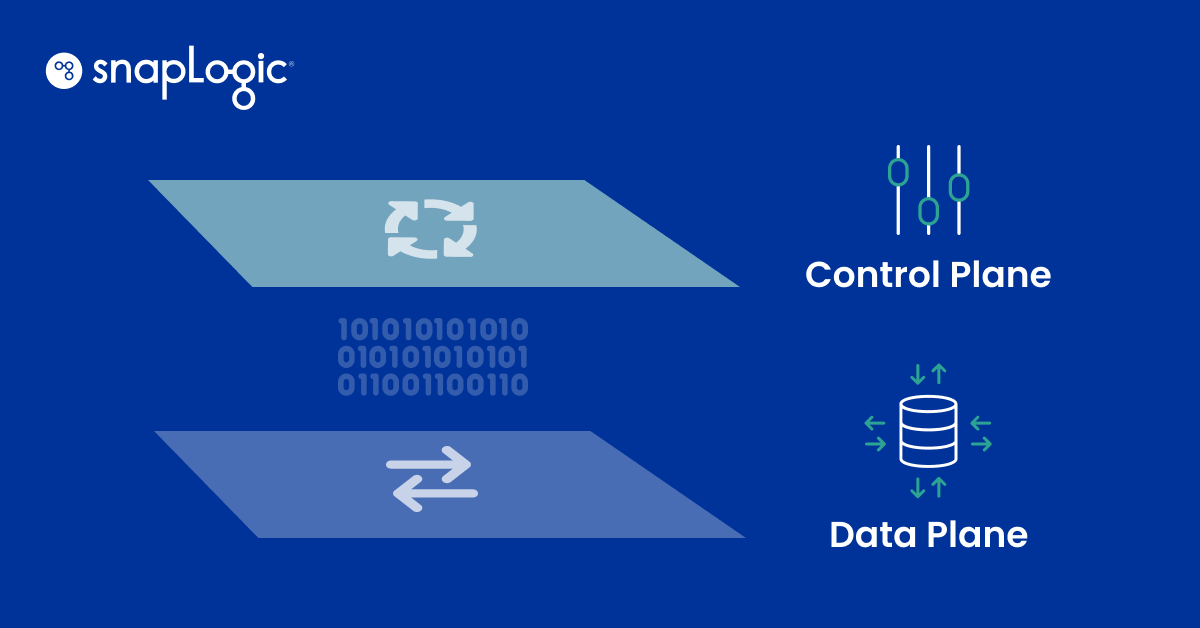
The architectural pattern that consistently scales across hybrid enterprises is clear: governance remains centralized while execution becomes distributed.
The control plane provides a single location for:
- Capability ownership
- Identity and policy enforcement
- Approvals and decision records
- Cost visibility
- End-to-end observability
Execution occurs near systems of record via distributed runners operating within enterprise boundaries. This model allows agents to act through governed paths while keeping enforcement and auditability centralized, protecting sensitive systems, retaining data within its boundary, and maintaining explainable outcomes. Autonomy is achieved within enterprise constraints, not by bypassing them.
A reference architecture that teams can repeat
Enterprise architecture succeeds when it is simple enough to explain and consistent enough to implement. Across this series, the reference model remains unchanged:
- MCP provides the connector standard
- Capabilities define execution contracts
- The control plane enforces policy and data governance
- Workflows provide deterministic execution
- Decision records provide traceability
- Hybrid runners extend execution into enterprise environments
The agent layer remains flexible, while the execution layer remains predictable. This separation allows innovation without introducing operational instability, creating a repeatable pattern that teams can implement across the enterprise.
Why is hybrid execution becoming necessary
Cloud-based execution enables early wins, but as the scope of work expands, enterprise realities quickly appear, such as:
- Valuable data is large, sensitive, and difficult to move
- Compliance requirements often prohibit moving certain datasets
- Private systems require controlled recovery patterns
- Changes to systems of record demand precise accountability
Enterprise execution requires traceability, approvals, and the ability to understand exactly what changed and why. Hybrid execution closes this gap, allowing the control plane to maintain governance while execution occurs close to the systems and data that matter. This approach makes the execution layer enterprise-ready without increasing exposure or risk.
A migration path that works in practice
Enterprises cannot pause operations to redesign architecture. Progress must be incremental, measurable, and safe, increasing adoption while reducing risk. The rollout typically follows this progression:
Step 1: Make execution visible
Organizations need to understand what capabilities exist, who owns them, and how execution flows across systems. A living capability catalog establishes this foundation, correlation IDs provide traceability, governance is applied to high-impact actions, and basic throttles or kill switches provide immediate operational control. This step defines enforcement boundaries without requiring a rewrite.
Step 2: Establish foundational capabilities
Rather than publishing dozens of tools, teams focus on a small number of high-impact capabilities, such as:
- Access provisioning
- Incident remediation
- Financial approvals
These capabilities establish shared operational standards, including deterministic execution, approvals, rollback strategies, and decision records. By creating repeatable patterns, teams naturally adopt best practices, and adoption accelerates.
Step 3: Introduce a publishing pipeline
Scaling requires contribution, which requires standards. A publishing pipeline allows teams to add capabilities while enforcing versioned contracts, classification, tests, observability hooks, policy enforcement, and ownership. Execution expands without fragmentation.
Step 4: Enable hybrid execution
Distributed runners are deployed within enterprise boundaries using scoped credentials, controlled egress, and environment isolation. Execution traces return to the control plane for visibility and auditability, allowing agents to act where value resides without moving sensitive data or creating risk.
Step 5: Operationalize
As adoption grows, operational discipline ensures sustainability. Capability-level kill switches, spend controls, lifecycle management, and version policies prevent drift and maintain predictable outcomes. Operational maturity allows automation to scale safely without increasing risk.
What an AI rollout looks like in practice
Hybrid execution enables governed outcomes across core workflows, for example:
- ERP updates: Agents invoke governed capabilities, policy evaluation occurs centrally, workflows run locally, and decision records capture approvals, field changes, and transaction identifiers
- Incident remediation: Runbooks are certified, execution is bounded, and traceability is captured end-to-end within private infrastructure
- Regulated data exports: Classification and masking are applied inside the boundary, and only approved outputs leave, accompanied by a full audit trail
- Legacy reconciliation workflows: Data is processed locally, remediation steps follow governed paths, and decision records capture every step
In every case, success is defined not by the agent’s intelligence, but by the consistency, traceability, and reliability of the execution layer.
The enterprise outcome
At scale, this is not primarily an AI tooling decision; it is establishing an execution standard. The control plane allows agents to act while maintaining operational control, auditability, predictable spend, and protection of systems of record.
The question is not whether agents can execute actions; it is whether execution can scale across the enterprise without losing coordination.
Closing perspective
This series began with a simple premise: AI introduces a new execution layer inside the enterprise. As execution becomes easier, coordination becomes the critical capability.
Organizations that succeed are not those that connect the most tools or deploy the most models. They are the ones who establish governed paths for execution early. The agentic enterprise is therefore not defined by intelligence alone, but by whether execution remains visible, governed, and sustainable as adoption grows. Technology will continue to evolve, but the need for coordinated execution will remain.
Book a demo of your new AI control plane today.
Explore the AI control plane series
Part 1: Middleware is the new control plane for AI
Understand how MCP reshapes enterprise architecture and collapses the distance between intent and action.
Part 2: What a real AI control plane looks like before MCP sprawl sets in
Learn the execution primitives, governance, and oversight that ensure autonomous systems run safely and predictably.
Part 3: How to run the AI control plane without turning autonomy into chaos
This post provides a practical operating model for scaling AI agents, managing risk, and building trust in production.
Part 4: Making Trust Visible: The Foundation for Agentic Scale
How to build a trust fabric through capabilities, auditable decision records, and tiered control to safely govern AI agents in the enterprise.
Part 5: The Governance Engine: How Enterprises Maintain Control Over Agentic AI
Explore building a scalable governance system and capability catalog to maintain control, auditability, and durability over autonomous AI agents.
Part 6: The Enterprise Rollout: Hybrid Execution and the Path to Operational AI
Understand the migration path and architectural pattern of centralized governance with distributed execution to achieve operational AI across hybrid enterprise environments.